
Disclosure: This post contains affiliate links. If you purchase through a link on this page, we may earn a small commission at no extra cost to you. We only recommend products we’d use in our own tanks.
Betta fish are one of the most popular freshwater fish in the world, and for good reason. They’re stunning to look at, packed with personality, and hardy enough that a first-time fishkeeper can successfully care for one. But “easy to keep alive” and “thriving” are two very different things. Most bettas sold in pet stores are sitting in tiny cups of cold, stale water – and too many owners replicate those conditions at home with small, unheated bowls.
A properly cared-for betta is active, curious, and colorful. They’ll learn to recognize you, swim up to the glass at feeding time, and display behaviors you’d never see in a neglected fish sitting in a cup. The difference between a betta that survives for a year and one that thrives for four or five comes down to a few basics: a heated, filtered tank of at least 5 gallons, a protein-rich diet, clean water, and an owner who understands what these fish actually need.
This guide covers everything from tank setup and water conditions to diet, tank mates, common diseases, and breeding. Whether you’re picking up your first betta or improving conditions for one you already have, this is written for you.
Quick Overview
| Attribute | Details |
|---|---|
| Common Names | Betta, Siamese Fighting Fish |
| Scientific Name | Betta splendens |
| Family | Osphronemidae |
| Origin | Southeast Asia (Thailand, Cambodia, Laos, Vietnam, Malaysia) |
| Adult Size | 2.5-3 inches (body); up to 5 inches including fins on long-finned varieties |
| Lifespan | 3-5 years with proper care (some reach 7+) |
| Tank Size | 5 gallons minimum (10 gallons ideal) |
| Temperature | 76-82°F (24-28°C) |
| pH | 6.5-7.5 |
| Temperament | Males aggressive toward other males; generally peaceful with appropriate tank mates |
| Diet | Carnivore/Insectivore (pellets, frozen, live foods) |
| Care Level | Easy to Moderate |
Betta Fish Appearance
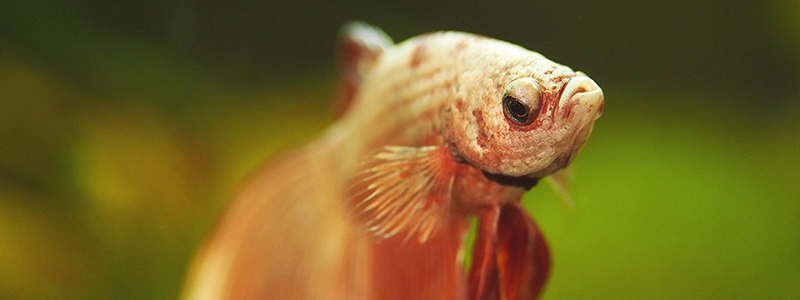
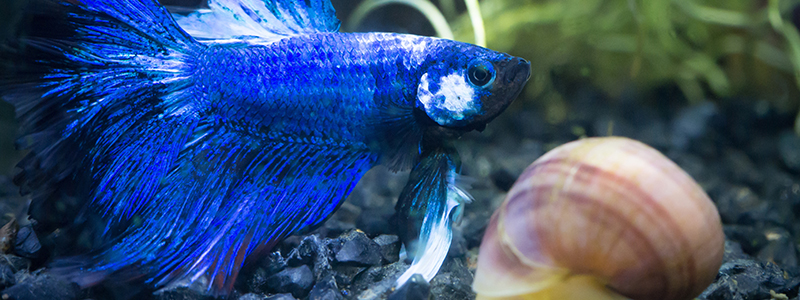
Wild bettas are actually fairly dull – short fins, muted brown and green tones. The spectacular fish you see in pet stores are the result of decades of selective breeding that has produced an enormous range of colors and fin types. Modern bettas come in virtually every color imaginable: solid reds, blues, purples, whites, blacks, and multicolor patterns like marble, koi, galaxy, and butterfly. Their fins can be flowing and dramatic or short and compact, depending on the variety.
Males are the showpieces – they have significantly larger, more elaborate fins than females. Females are smaller, with shorter fins and a slightly thicker body. Both sexes have the characteristic upturned mouth designed for surface feeding and a small body that typically reaches 2.5-3 inches in length. Long-finned males can appear much larger when you factor in their trailing fins.
Common Betta Types
| Tail Type | Description | Notes |
|---|---|---|
| Veiltail | Long, flowing tail that droops downward | Most common and affordable variety. The “default” pet store betta. |
| Halfmoon | Tail spreads to a full 180-degree fan when flared | Highly sought after for their dramatic display. Heavy fins can cause swimming difficulty. |
| Crowntail | Spiky, crown-like fin rays that extend beyond the webbing | Distinctive look. Fin rays are more fragile and prone to damage. |
| Plakat | Short fins, closer to wild betta body shape | Strongest swimmers. Less prone to fin damage and disease. Great for beginners. |
| Double Tail | Two distinct tail lobes instead of one | Genetically more prone to swim bladder issues. Wider dorsal fin than other types. |
Betta Fish Tank Setup
Tank Size
The single biggest improvement most betta owners can make is upgrading from a bowl to a proper tank. Five gallons is the recommended minimum, and 10 gallons is ideal. Larger tanks are actually easier to maintain because the water parameters are more stable – a small temperature swing or ammonia spike in a 1-gallon bowl can be lethal, while the same fluctuation in a 10-gallon tank barely registers. If you’re looking for specific recommendations, check our guide to the best betta fish tanks.
Yes, bettas can survive in smaller containers – they’re labyrinth fish that can breathe atmospheric air, which is why they don’t suffocate in those tiny pet store cups. But surviving and thriving are not the same thing. A betta in a 1-gallon unheated bowl will be lethargic, pale, and susceptible to disease. The same fish in a heated, filtered 5-gallon tank will be active, colorful, and display the personality these fish are known for.
Filtration
Bettas absolutely need a filter. The myth that they don’t comes from their ability to breathe air, but breathing air doesn’t protect them from ammonia poisoning. A filter processes waste, removes toxins, and keeps the water oxygenated. The key is choosing a gentle filter – bettas have long, flowing fins and can’t swim well in strong currents. Sponge filters are the most popular choice for betta tanks because they provide excellent biological filtration with virtually no current. If you’re using a hang-on-back filter, look for one with an adjustable flow rate and baffle the output if needed.
Heating
Bettas are tropical fish that need water temperatures between 76-82°F, with 78-80°F being the sweet spot. Unless your room stays at 80°F year-round, you need a heater. Cold water is one of the most common causes of lethargy, appetite loss, and disease in bettas. A good rule of thumb is 5 watts of heater power per gallon of water. For a 5-gallon tank, a 25-watt adjustable heater works well. Always pair your heater with a thermometer to monitor the actual water temperature – cold water can kill a betta fish.
Water Conditions
| Parameter | Recommended Range |
|---|---|
| Temperature | 76-82°F (24-28°C) |
| pH | 6.5-7.5 |
| Ammonia | 0 ppm |
| Nitrite | 0 ppm |
| Nitrate | Below 20 ppm |
| Hardness (GH) | 3-4 dGH (soft to moderate) |
Tap water is fine for bettas as long as you treat it with a water conditioner to remove chlorine and chloramine. Products like Seachem Prime or Fritz Complete neutralize these chemicals instantly. Never use untreated tap water – chlorine and chloramine damage gills and can be fatal. Perform 25% water changes weekly in filtered tanks, or more frequently in smaller setups. Always match the temperature of your new water to the tank water before adding it.
Substrate and Decorations
Sand or smooth gravel both work well as substrate. Bettas don’t dig, so the choice is largely aesthetic. For decorations, the most important rule is to avoid anything sharp that could tear a betta’s delicate fins. Run the “pantyhose test” – if a decoration snags pantyhose dragged across it, it will snag your betta’s fins too. Avoid hard plastic plants entirely and use either live plants or silk artificial ones instead.
Live plants are the best option if you can manage them. Java Fern, Anubias, Java Moss, and Amazon Swords all do well in betta tanks, provide natural filtration, and give your fish places to explore and rest. Bettas love resting on broad leaves near the surface – a betta hammock (a leaf suction-cupped to the glass near the waterline) is one of the most popular betta accessories for this reason. Moderate lighting on a 8-12 hour timer mimics natural day/night cycles and supports plant growth without stressing the fish.
A lid is essential. Bettas are jumpers, especially when startled or when water quality deteriorates. Leave a small gap between the waterline and the lid so the fish can access the surface to breathe – they need this as labyrinth fish.
Betta Fish Diet and Feeding
What They Eat
In the wild, bettas are insectivores. They eat mosquito larvae, small insects, insect eggs, and tiny crustaceans near the water’s surface. They are not herbivores and do not eat plant roots – this is a persistent myth. Their short digestive tract is designed for protein, not plant matter. In captivity, their diet should reflect this with high-protein pellets as the staple, supplemented with frozen or live foods for variety.
Recommended Foods
| Food Type | Best Options | Notes |
|---|---|---|
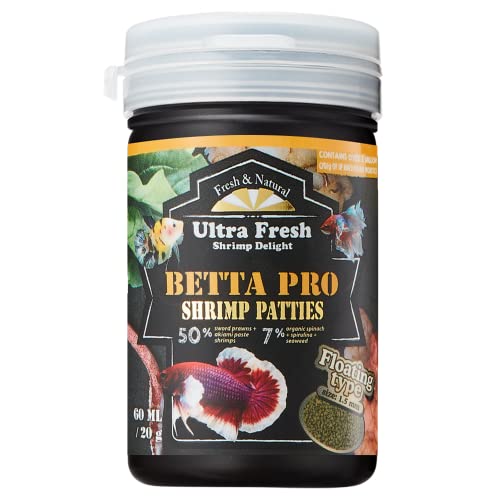
| Pellets (daily staple) | Hikari Betta Bio-Gold, Ultra Fresh Betta Pro Shrimp Patties | Look for pellets with 40%+ protein content. Pellets are better than flakes – less mess, easier to portion. |
| Frozen foods | Bloodworms, brine shrimp, daphnia, mysis shrimp | Feed 2-3 times per week as a supplement. Thaw before feeding. Great for color enhancement. |
| Live foods | Daphnia, brine shrimp, wingless fruit flies, blackworms | Excellent enrichment that stimulates hunting behavior. Daphnia also acts as a natural laxative. |
| Avoid | Generic tropical flakes, goldfish food, bread, plant-based foods | These are too low in protein and too high in fillers. Bettas are carnivores, not omnivores. |
Hikari Betta Bio-Gold is one of the most reliable daily pellets for bettas. It’s been developed specifically for bettas with a high protein content, color-enhancing ingredients, and a small pellet size that prevents overfeeding. I’ve used it as a staple across multiple bettas and it consistently produces good color and healthy fish.

For variety, Ultra Fresh Betta Pro Shrimp Patties are an excellent supplement. They’re made with real sword prawns and akiami paste shrimp, giving your betta a protein-dense food that’s closer to what they’d eat in the wild. The natural ingredients also help keep the water cleaner than many processed alternatives.
How Much and How Often to Feed
Feed your betta once or twice a day, only as much as they can eat in about 1-2 minutes. A betta’s stomach is roughly the size of its eye, so 2-4 pellets per feeding is usually enough. Overfeeding is far more dangerous than underfeeding – it causes constipation, swim bladder problems, and degrades water quality. If your betta’s belly looks visibly swollen after eating, you’re feeding too much. Read our detailed feeding guide for more specifics.
One fasting day per week (no food at all) helps prevent constipation and gives the digestive system a break. This is normal and healthy – bettas can go up to 14 days without food without starving, so skipping one day causes no harm. If your betta refuses to eat, check water temperature and quality first – these are the most common causes of appetite loss.
Betta Fish Tank Mates
Behavior and Temperament
The “Siamese Fighting Fish” reputation is earned but often misunderstood. Male bettas are aggressive toward other male bettas – they will fight, often to the death. This is non-negotiable: never put two males in the same tank unless there is a solid, opaque divider between them. However, bettas are not universally aggressive toward all other fish. Many bettas coexist peacefully with appropriate tank mates in tanks of 10 gallons or larger.
Aggression varies significantly between individual bettas. Some are mellow and ignore everything; others will attack anything that moves. Watch for flaring (fins spread wide, gill covers extended) as an early warning sign. If your betta is constantly flaring at a tank mate, the pairing isn’t working and you should separate them before injuries occur.
Compatible Tank Mates
| Tank Mate | Compatibility | Notes |
|---|---|---|
| Corydoras Catfish | Good | Bottom dwellers that stay out of the betta’s territory. Keep in groups of 4+. Need 10+ gallon tank. |
| Kuhli Loaches | Good | Shy, nocturnal bottom dwellers. Keep in groups of 3+. Rarely interact with bettas. |
| Neon/Ember Tetras | Good | Small, fast schooling fish. Keep in groups of 6+. Need 10+ gallon tank. Ember tetras are calmer than neons. |
| Ghost/Amano Shrimp | Good | Excellent cleanup crew. Some bettas will hunt smaller shrimp, so provide plenty of hiding spots. |
| Nerite Snails | Good | Great algae eaters. Armored shell protects them. Most bettas ignore them entirely. |
| African Dwarf Frogs | Caution | Can work but frogs are slow feeders and may not get enough food. Monitor closely during feeding. |
| Fancy Guppies | Avoid | Their long, colorful fins trigger betta aggression. Bettas often mistake male guppies for rival bettas. |
| Other Male Bettas | Avoid | Will fight to the death. No exceptions. Not even in large tanks. |
| Tiger Barbs / Fin Nippers | Avoid | Will shred a betta’s fins, causing stress and infection. |
For a deeper dive into compatible species, see our full guide on what fish can live with bettas and our betta tank mates guide.
How to Keep Betta Fish Healthy
A healthy betta displays strong, vibrant coloration, intact fins, clear eyes, and an active, curious personality. They should swim throughout the tank (not just sit at the bottom or float at the top), eat eagerly, and react when you approach. If your betta is hiding constantly, has dull or faded color, or shows clamped fins, something is wrong – and the cause is almost always water quality or temperature.
Common Diseases
| Condition | Symptoms | Treatment |
|---|---|---|
| Fin Rot | Frayed, ragged, or receding fins; reddened edges; black or brown discoloration at fin tips | Improve water quality immediately with daily 25-50% water changes. Mild cases resolve with clean water alone. For advanced cases, treat with API Erythromycin or Kanaplex. |
| Ich (White Spot) | Small white spots covering body and fins; scratching against objects; clamped fins | Raise temperature to 82-84°F gradually to speed up parasite lifecycle. Treat with ich medication (Kordon Rid-Ich or API Super Ick Cure). Remove carbon from filter during treatment. |
| Velvet | Gold or rust-colored dust on body (use a flashlight to see it); clamped fins; lethargy; scratching | Highly contagious. Darken the tank (parasite needs light). Raise temperature. Treat with copper-based medication like Seachem Cupramine. Act fast – velvet can be fatal within days. |
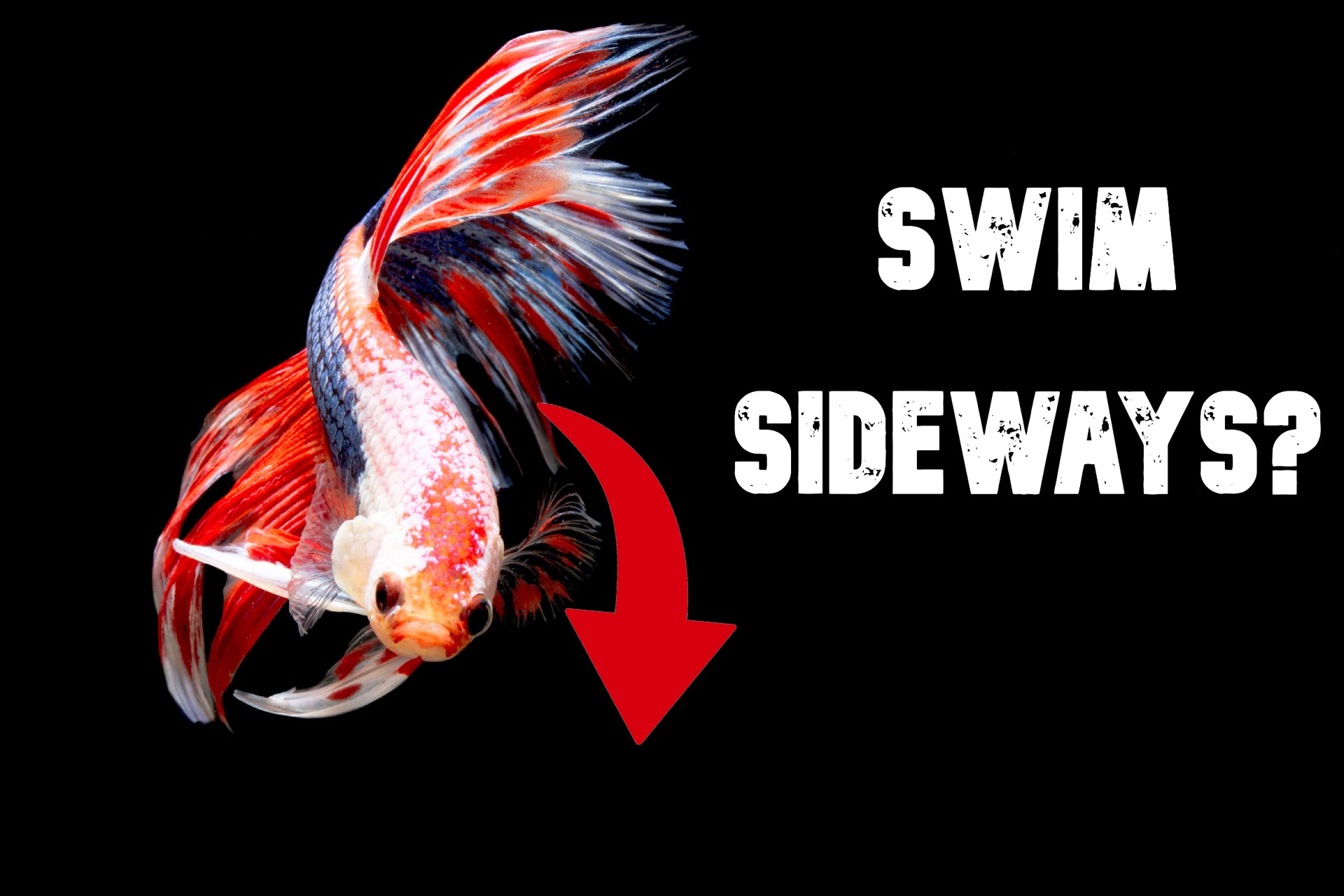
| Swim Bladder Disease | Floating sideways, sinking to bottom, unable to maintain normal position, S-shaped swimming | Usually caused by overfeeding or constipation. Fast the fish for 2-3 days. Feed a single blanched, deshelled pea to help clear the digestive tract. Improve water quality. More common in Double Tail bettas. |
| Columnaris | White or gray cotton-like patches on body, mouth, or fins; rapid breathing; lethargy | Bacterial infection that progresses fast. Isolate immediately. Treat with Kanaplex or Furan-2. Lower temperature to 75°F to slow bacterial growth. Can be fatal within 24-72 hours if untreated. |
| Dropsy | Severely bloated body; scales protruding outward (pinecone appearance); lethargy | Internal organ failure, usually kidney infection. Extremely difficult to treat by the time symptoms appear. Epsom salt baths and antibiotics may help if caught very early, but prognosis is poor. |
Prevention
Nearly every betta disease traces back to water quality, temperature, or stress. Maintain a consistent temperature between 76-82°F, keep ammonia and nitrite at 0 ppm, perform weekly water changes, and don’t overfeed. Quarantine any new fish or plants for at least two weeks before adding them to your betta’s tank. Avoid sharp decorations that can damage fins, since even small fin tears can become entry points for bacterial and fungal infections. If you notice any signs of illness, test your water parameters immediately – more often than not, a water change is the most effective first step.
Breeding Betta Fish
Breeding bettas is fascinating but not something to attempt casually. A single spawn can produce 50-500+ fry, and you’ll need space, food, and a plan for all of them. If you’re serious about breeding, start by sourcing your pair from a reputable breeder rather than a pet store – store bettas are often too old (past their breeding prime) and their genetics are unknown.
Set up a dedicated breeding tank of 5-10 gallons with a removable divider, shallow water (4-6 inches deep), and gentle heat (80°F). The male will build a bubble nest at the surface – this is where the eggs will be deposited. Introduce the pair on opposite sides of the divider and let them see each other for a few days. When the female shows vertical breeding stripes and the male has built a substantial bubble nest, remove the divider.
Courtship involves the male displaying and chasing the female, which can look rough. Provide plenty of hiding spots for the female. Once spawning occurs, the male will collect the falling eggs and place them in the bubble nest. Remove the female immediately after spawning is complete – the male will become aggressively protective of the nest and may injure or kill her. The male tends the eggs alone, and you should remove him once the fry are free-swimming (usually 2-3 days after hatching) to prevent him from eating them. Fry will need infusoria or liquid fry food for the first week, then can graduate to baby brine shrimp.
Frequently Asked Questions
How long do betta fish live?
With proper care, bettas typically live 3-5 years. Some well-maintained bettas have lived 7+ years. Most pet store bettas are already 6-12 months old when purchased, so keep that in mind when estimating lifespan. The biggest factors are water quality, temperature stability, and diet. Read our full guide on how long betta fish live.
Do betta fish need a heater?
Yes. Bettas are tropical fish that need water between 76-82°F. Room temperature in most homes (65-72°F) is too cold for bettas and will cause lethargy, weakened immune systems, and susceptibility to disease. An adjustable heater with a thermometer is essential for any betta tank.
Do betta fish need a filter?
Yes. While bettas can breathe air and tolerate lower oxygen levels than other fish, they still produce waste that creates ammonia. A filter processes this waste and keeps the water safe. Use a gentle sponge filter or a hang-on-back filter with adjustable flow – bettas can’t handle strong currents.
Can betta fish live in a bowl?
They can survive in a bowl, but they won’t thrive. Bowls can’t hold heaters or filters, water quality degrades rapidly, and temperature fluctuations stress the fish. A 5-gallon tank with a heater and filter is the minimum for a healthy betta. See our article on betta fish bowls for more details.
Why is my betta fish not eating?
The most common causes are cold water, stress from a new environment, poor water quality, or overfeeding. Check your water temperature and parameters first. A betta that was recently brought home may not eat for 1-3 days while it acclimates – this is normal. See our guide on why your betta isn’t eating for troubleshooting.
Can betta fish eat insects?
Yes, bettas are insectivores in the wild and insects are one of the best foods you can offer. Wingless fruit flies, mosquito larvae, and small ants are all excellent options. Make sure any insects are pesticide-free and appropriately sized for your betta’s mouth.
Do betta fish sleep?
Bettas do sleep, usually at night when the lights are off. They may rest on leaves, decorations, or even the substrate. A betta lying still on a leaf at night is perfectly normal – it’s not dead. Provide a consistent light cycle of 8-12 hours of light followed by darkness to support healthy sleep patterns.
Why is my betta fish swimming sideways?
Sideways swimming usually indicates swim bladder disease, most often caused by overfeeding or constipation. Fast the fish for 2-3 days, then feed a small piece of blanched, deshelled pea. If it doesn’t improve, check water quality. See our full article on why bettas swim sideways.
Can betta fish live with other fish?
Yes, in tanks of 10+ gallons with appropriate species. Good choices include corydoras catfish, kuhli loaches, ember tetras, and nerite snails. Avoid other bettas (especially males), fancy guppies, and fin-nipping species. Every betta has a different temperament, so always have a backup plan if aggression occurs. See our betta tank mates guide.
Can betta fish survive outdoors?
Only in warm climates where water temperatures stay consistently above 76°F. In tropical regions, bettas can be kept in outdoor ponds or tubs. In most of the United States, outdoor temperatures fluctuate too much for bettas to survive year-round. See our article on whether betta fish can survive outdoors.
Final Thoughts
Betta fish are one of the most rewarding freshwater fish you can keep. They’re beautiful, interactive, and each one has a distinct personality that develops over time. The bar for keeping them alive is low – they’re remarkably tough fish. But the bar for keeping them healthy and happy is higher than most pet stores suggest, and the difference in behavior and longevity between a neglected betta and a well-cared-for one is dramatic.
The most common mistakes are keeping them in unheated, unfiltered bowls, overfeeding, and housing males together. Get those three things right – heated filtered tank of at least 5 gallons, controlled feeding of 2-4 pellets once or twice daily, and one male per tank – and your betta has every chance of living a full, colorful life of 3-5 years or more.