You’re packing for a Friday flight, the cat sitter is booked, and you suddenly realize nobody is going to feed the betta. So how long can betta fish live without food before something bad happens? The short, honest answer: a healthy adult betta will sail through three to five days unfed with no measurable harm, and most articles citing “14 days” are accidentally giving people permission to starve their fish.
I’ve kept bettas through plenty of long weekends and two-week work trips. The pattern is consistent: the bettas that get hurt during their owner’s vacation almost never get hurt by hunger. They get hurt by good intentions gone wrong, like a plaster vacation block that dumped its load early, or an auto-feeder that jammed on day two. For a broader look at keeping these fish well, see our betta fish care basics. This article zooms in on the fasting question specifically.
Disclosure: This post contains affiliate links. If you purchase through a link on this page, we may earn a small commission at no extra cost to you. We only recommend products we’d use in our own tanks.
Betta care at a glance
| Attribute | Detail |
|---|---|
| Common Names | Betta, Siamese fighting fish |
| Scientific Name | Betta splendens |
| Family | Osphronemidae |
| Origin | Thailand, rice paddies and slow-moving water |
| Adult Size | 2.5–3 in (6–7 cm) |
| Lifespan | 3–5 years with proper care |
| Tank Size | 5 gallons practical minimum; 10 gallons substantially better |
| Temperature | 78–80°F (26–27°C) ideal; comfort band to 83°F |
| pH | 6.5–7.5 |
| Temperament | Solitary males; territorial |
| Diet | Obligate carnivore / insectivore |
| Care Level | Easy to Moderate |
How long can a betta fish actually live without food?
The accurate answer is layered. Three windows matter, and conflating them is exactly how bettas end up in trouble.
| Window | What’s actually happening | Should you use this for vacation? |
|---|---|---|
| 3 to 5 days | Safe for a healthy adult betta. No measurable harm. | Yes, just fast the fish. |
| 5 to 7 days | Stretching it. Starvation mode begins around day 5 or 6 as the fish starts catabolizing reserves. | Borderline. Consider a sitter. |
| Up to 14 days | Biological survival ceiling. Fish may live, but with muscle wasting, immune decline, and welfare cost. | No. This is not a recommendation. |
The “14 days without food” figure floats around the internet a lot, and it is technically true. However, it is a survival ceiling, not a vacation guideline. Two independent care sources confirmed bettas can live through roughly 10 to 14 days unfed, and both explicitly framed that as not humane. Treating the ceiling as a green light is the single most common way well-meaning betta owners hurt their fish.
What bettas look like (and how to sex them)
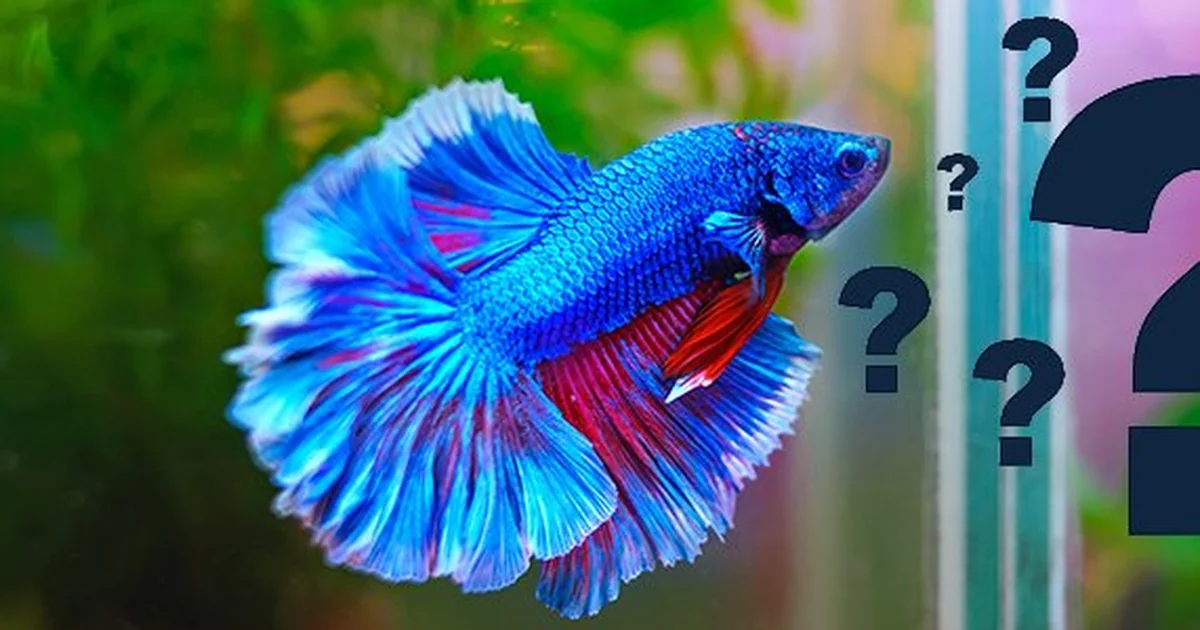
Bettas are one of the most visually variable freshwater fish in the hobby. Decades of selective breeding have produced an enormous range of color and fin morphs, which means the betta sitting in a pet-store cup may look almost nothing like the wild-type fish from a Thai rice paddy.
Adults are commonly cited at about 2.5 to 3 inches (6 to 7 cm), including the tail. Males are the showpiece sex: long flowing fins, intense saturated coloration, and aggressive flaring behavior. Females are shorter-finned, often less saturated in color, and have a visible white “ovipositor” spot near the vent when mature. In domesticated lines, female fin length and color have crept upward too, so sexing a young betta sometimes takes a careful look at body shape (females are stockier) rather than fins alone.
Knowing what a healthy betta looks like matters for the fasting conversation specifically, because the visible signs of starvation, like a sunken belly and faded color, only stand out if you know the baseline shape and saturation of your individual fish.
Common betta varieties
| Variety | Description |
|---|---|
| Veiltail | The classic pet-store betta. Long, flowing tail that droops downward. |
| Halfmoon | Tail opens to a full 180-degree semicircle when flared. |
| Crowntail | Webbing between fin rays reduced or absent, giving spiky “crown” appearance. |
| Plakat | Short-finned variety closer to wild-type body shape. Hardier and more agile. |
| Koi / Galaxy / Marble | Color patterns reminiscent of koi, with patches that can shift over time. |
| Dragonscale | Thick, metallic-looking scales. Striking, but heavy scaling can grow over the eye (“diamonding”) in some lines and affect vision. |
| Double Tail | Caudal fin split into two distinct lobes. |
The biology behind betta fasting tolerance
Bettas tolerate fasting better than most tropical community fish, and there are three good biological reasons for that.
First, their stomach is roughly the size of their eyeball. Two to three pellets twice a day is the realistic feeding ceiling, which means a healthy betta is never carrying much food internally to begin with. For more on portioning, our betta feeding portion guide goes deeper.
Second, bettas have a labyrinth organ that lets them gulp air at the surface. They do not burn the metabolic energy that gill-only fish spend extracting dissolved oxygen from low-flow water. In their wild habitat of slow Thai rice paddies, low food availability and stagnant water are normal.
Third, at the correct stable temperature of 78 to 80 degrees Fahrenheit, an adult betta has a relatively low baseline metabolism for a tropical fish. Consequently, this puts bettas at the more tolerant end of the freshwater spectrum. Most community tropicals safely fast around a week, and our overview of pond fish fasting tolerance covers the coolwater end.
What happens to a betta during a fast, day by day
Here is the rough physiological timeline for a healthy adult betta at the correct temperature.
Days 1 to 3: Completely normal. Stored glycogen and a small amount of fat reserve get tapped. Behavior and appetite are unchanged. If anything, the gut clears any backlog and digestion resets.
Days 3 to 5: Still safe for a healthy adult. The fish is running on internal reserves but there is no measurable harm. This is the upper bound of routine fasting that experienced keepers treat as fully safe.
Days 5 to 7: The catabolic shift starts. Around day 5 or 6 the body begins breaking down fat and then muscle for energy. Cortisol, the stress hormone, starts to elevate.
Days 7 to 14: Starvation mode in earnest. Muscle wasting becomes visible as a sunken belly. Color fades. Immune function declines, which means opportunistic infections like fin rot or ich can take hold. Survivable, but not okay.
Betta starvation signs and when to worry
If you return from a trip and want to know whether your betta is fine or quietly suffering, look for these specific signs. They are subtle individually but cluster meaningfully.
Sunken belly or pinched profile. A well-fed betta has a smooth, slightly rounded underside from gills to vent. A starving betta develops a visible concave dip in the belly and a sharp narrowing right behind the head. This is the most reliable visual cue.
Loss of color saturation. Colors look washed out compared to the rich reds, blues, or marbling you remember. Stress lines, which are horizontal pale bars on the flanks, sometimes appear.
Lethargy beyond normal resting. Bettas naturally rest a lot. A starving betta sits on the substrate or in a corner and does not respond to movement at the glass with the usual interest.
For instance, if your betta refuses food when you offer it after coming home, that’s not necessarily starvation rebound. Our diagnostic for why your betta won’t eat walks through the differential.
Factors that shorten the safe-fast window
The 3-to-5-day floor assumes a healthy adult betta at correct temperature. Several conditions pull that window shorter.
Higher tank temperature. The comfort band for bettas extends to about 83 degrees Fahrenheit, but the higher you sit in that range, the faster the metabolism burns. For vacation purposes, the lower end of the ideal range is your friend.
Sub-5-gallon tank. In small volumes, parameter swings amplify. Ammonia from any source builds up faster, and there is less buffer against evaporation while you are away.
Juvenile or very small bettas. Young fish have higher metabolic demands and almost no fat reserves. They need two to three small meals a day, and care guides advise keeping them unfed for no more than about a day, with one to two days as an emergency limit at most.
Sick, recovering, or recently introduced fish. A betta you brought home last week is not a fasting candidate. Fasting windows for sick or stressed bettas should be tighter, typically 3 to 5 days at most.
Betta vacation feeding by trip length
This is the framework that flips most vacation-feeding articles on their head. For short trips, fasting your betta is genuinely safer than introducing a feeding mechanism that can fail.
| Trip length | Best plan for a healthy adult betta |
|---|---|
| 1 to 7 days | Fast the fish. Skip vacation blocks. Skip auto-feeders unless you use one routinely already. |
| 7 to 14 days | Pre-tested auto-feeder (run it 2 to 3 days before you leave) or a trusted human caretaker given pre-portioned packets. |
| Over 14 days | Auto-feeder PLUS a human check-in for water level, heater status, and illness signs. |
For example, a four-day weekend in a properly cycled 5-gallon tank at 78 degrees? Fast the fish, top off evaporation, leave the heater running. Going for 10 days? Now you need a real plan. For the feeder route, our reliable vacation feeder guide walks through models and the pre-testing protocol.
Auto-feeder vs fasting for bettas: what actually fails
The reason “just fast them” wins for short trips is that auto-feeders have three documented failure clusters.
First, humidity and clogging. Hopper food absorbs moisture from the tank surface, particularly if there is filter spray or an open lid nearby. Pellets resist this better than flakes, which is convenient for bettas since most betta foods are pelletized.
Second, inconsistent portioning. Rotating-barrel feeders dispense more food when the hopper is full and less when nearly empty. Keep the hopper around half full, and pre-test the unit for 2 to 3 days before you leave.
Finally, battery or power failure. Cheap units quit silently mid-trip. The strongest mitigation, by a wide margin, is the pre-test. An untested auto-feeder on a 10-day trip is a roulette wheel.
Why plaster vacation blocks are a documented hazard
Plaster-based vacation blocks remain prominently shelved in pet stores. They are also a known fish-kill risk and should be avoided.
The mechanism is straightforward and bad. Plaster blocks dissolve into the water column rather than being eaten in discrete portions. Dissolution is uneven, especially as the block weakens or cracks. As a result, a slug of organic matter goes into the tank all at once. That food feeds a bacterial bloom, which consumes oxygen and generates ammonia faster than the established biofilter can convert it.
Specifically, documented incidents include 93 percent mortality in crayfish hatchlings from a single block dump, and ammonia readings of 0.25 ppm in a 55-gallon community tank, which is lethal to sensitive species like angelfish. A betta in 5 gallons is on the small, vulnerable end of that spectrum.
Modern gel-based vacation feeders are a meaningful improvement, with slower, more predictable dissolution. However, they remain secondary to fasting for short trips and secondary to a pre-tested auto-feeder for longer ones.
Weekly betta fast benefits and why it’s good for your fish
Here is one of the more useful pieces of betta-keeping wisdom that almost never gets surfaced: a weekly one-day fast is broadly recommended by experienced keepers.
Because the betta’s stomach is roughly the size of its eye, overfeeding is the dominant welfare risk for the species. In particular, constipation, bloat, and swim bladder issues caused by overfeeding cause more avoidable betta deaths than underfeeding ever has. The weekly betta fast benefits stack up: the digestive tract clears, food backlog is prevented, and constipation risk drops meaningfully.
The implementation is simple. Pick a consistent day each week and skip feeding entirely. No tricks, no half-portion, no pea unless the fish is already constipated. Just one day off.
What to do before leaving for a trip
For any trip longer than a long weekend, a small amount of prep meaningfully reduces risk.
First, do a water change 24 to 48 hours before you leave. Get the tank into clean baseline shape. Do not do it the morning of departure; you want the water chemistry to settle before your absence begins.
Next, verify the heater is holding temperature. Check the thermometer reading, not just the heater dial. Cold-shock onset for bettas begins around 72 degrees Fahrenheit. If your home heat will be turned down while you’re away, factor that in.
Verify the filter is running cleanly. Rinse the media in old tank water if it’s due; don’t deep-clean the day before because you’ll disturb the bacterial colony.
Reduce the photoperiod. Drop the light timer to 6 or 7 hours instead of the usual 8 to 10. Less light, less algae bloom, less load on the system. Additionally, if you’re using an auto-feeder, pre-test it for two to three days with the actual food.
What about juvenile bettas, fry, and sick bettas?
Juvenile bettas have higher metabolic rates and minimal reserves. The usual advice is two to three small daily meals, and not leaving them unfed for more than about a day, with one to two days as an emergency maximum. If you have a juvenile and a trip coming up, you need a sitter or a reliable auto-feeder.
Betta fry need multiple small feedings per day of live or microscopic foods. Leaving fry for any meaningful trip without a dedicated caretaker is not realistic.
Sick or recovering bettas sit somewhere between juveniles and adults. A 3-to-5-day fast window is the upper bound. If you are in the middle of treating an illness, postpone non-essential travel.
Common betta diseases and how to treat them
A betta entering a fast in good health handles it fine. A betta entering a fast already fighting a low-grade infection is a different story. The single best vacation insurance is a healthy fish at the start of the trip.
| Condition | Symptoms | Treatment |
|---|---|---|
| Fin rot | Frayed, blackened, or receding fin edges; clamped fins; lethargy | Improve water quality first. Aquarium salt at low dose for mild cases; antibacterial medication for advanced cases. |
| Ich | Small white salt-like spots; flashing against decor; rapid breathing | Raise temperature gradually to 82–84°F, combined with an ich-specific medication. Treat for the full course. |
| Constipation / bloat | Swollen belly; no waste output; difficulty swimming; clamped fins | Fast for 2–3 days; offer a small piece of blanched, deshelled pea once. Prevent with weekly fast and smaller portions. |
| Swim bladder disorder | Floating sideways or unable to control depth; often follows overfeeding | Fast 2–3 days; reduce water level temporarily; treat underlying constipation. |
| Velvet | Fine gold or rust-colored dusting on body; flashing; lethargy | Dim the tank, raise temperature gradually, treat with copper-based or anti-parasitic medication. |
Prevention beats treatment. Stable water parameters, consistent temperature in the 78–80°F band, a high-protein staple diet, and the weekly fast cover most of what keeps a betta out of the disease column.
Common mistakes that turn a fast into a fish kill
Fasting itself rarely kills a healthy adult betta inside the 3-to-5-day window. What kills bettas during their owner’s absence is the combination of fasting with a second problem.
Pairing a fast with a heater set too high. Higher temperature, faster metabolism, faster reserve depletion. Set the heater to the lower end of the ideal range before you leave.
Combining fasting with a dirty tank. A neglected tank with already-elevated nitrate can produce an ammonia uptick over a week even with zero food added. Pre-trip water change is non-negotiable for older setups.
Asking a non-fishkeeper to just feed the fish. Without portioning instructions, almost everyone overfeeds. Pre-portioned daily packets fix this completely.
Best betta tank mates (and what to avoid)
Tank mates change the fasting math. In a community setup, you may not be able to fast everyone at once, since other species have different tolerances.
| Species | Compatibility | Notes |
|---|---|---|
| Nerite snails | Good | Peaceful algae grazers ignored by most bettas. Self-feed on biofilm during fasts. |
| Corydoras catfish | Good | Peaceful bottom-dwellers; need 15+ gallons and a group of at least 5. |
| Otocinclus | Good | Peaceful algae grazers, ideal for planted setups, ignored by bettas. |
| Ember tetras | Caution | Often work in planted 15+ gallon tanks, but individual betta temperament varies. |
| Amano shrimp | Caution | Larger than cherries so harder to eat, but bettas still hunt them. Heavy planting required. |
| Other male bettas | Avoid | Will fight to the death. Never house two males in the same tank. |
| Tiger barbs | Avoid | Notorious fin-nippers. Long betta fins are exactly the target they go for. |
When your betta refuses food after you return
You come home, drop a pellet, and your betta ignores it. Is that the fast’s fault? Usually not.
A short period of food refusal in the first 1 to 3 days after a change is a normal stress response. Healthy fish resume eating within about 7 days of stable conditions. Offer a half-portion the first day back. Try a more attractive food the next day, such as a frozen bloodworm or two, which often triggers feeding response in a hesitant fish.
If refusal extends past a week, or if you see hiding, color fading, or clamped fins, treat it as more than a fasting rebound. Our betta not eating diagnostic walks through the differential.
Final thoughts on betta fasting and vacation planning
If you remember one thing from this article, make it this: for trips up to about a week, fasting a healthy adult betta is the safest plan. The 14-day figure that gets repeated everywhere is a survival ceiling, not a vacation guide.
A weekly one-day fast is a small, easy practice that materially reduces the risk of constipation and overfeeding-related illness. For trips over a week, layer your plan with a pre-tested auto-feeder or pre-portioned caretaker packets. For broader care patterns, our comprehensive betta care guide ties everything together.
Betta fasting FAQs
Can a betta really survive 14 days without food?
A healthy adult betta can technically survive about 14 days without food, but that is a biological survival ceiling, not an acceptable vacation plan. Welfare cost begins around day 5 or 6 as the fish enters starvation mode. Treat 3 to 5 days as the safe window.
Is it better to use a vacation feeder or just fast my betta?
For trips of 7 days or less with a healthy adult betta, fasting is safer than any vacation feeder. Auto-feeders can clog or overdispense, and plaster vacation blocks have documented ammonia-kill incidents. For 7 to 14 days, use a pre-tested auto-feeder or a sitter with pre-portioned packets.
How long can a betta fry go without food?
Betta fry cannot fast safely. They have high metabolic demands and typically need multiple small feedings per day of live or microscopic foods. Any trip longer than a few hours requires a dedicated caretaker.
Will my betta starve over a long weekend?
No. A healthy adult betta is completely safe through a 3-to-4-day trip with no food, provided the heater and filter are running normally. Do a water change a day or two before you leave and skip any urge to “feed extra” the day before.
Should I feed my betta extra before I leave for vacation?
No. A betta’s stomach is roughly the size of its eye and cannot store meaningful extra food. Overfeeding the day before departure causes bloat, fouls the water, or both. Stick to the normal portion.