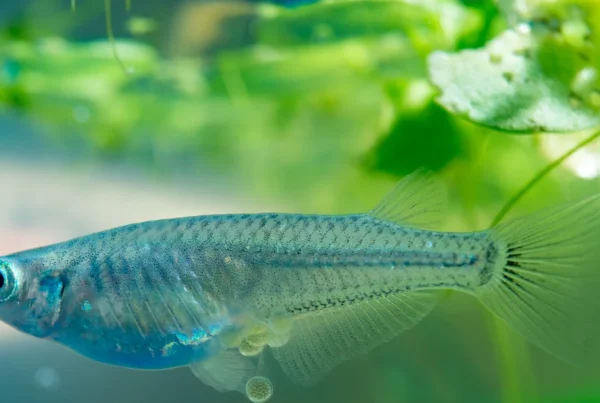
The single biggest mistake people make with otocinclus catfish care happens at the store, not in the tank. Half the otos in any given retail display have sunken, concave bellies, and those fish are already dying by the time you carry them home. The other half look round-bellied and healthy, and those are the ones worth your money. There is nothing magical about the difference. It is just the result of how long the fish have been in the import chain, what they have had to eat along the way, and whether the store tank has had any biofilm for them to graze on.
If you pick the right specimens and put them in a mature, planted tank with established biofilm, otos are one of the most useful nano-tank fish in the freshwater hobby. They stay under two inches, they leave shrimp completely alone, and they clean diatom film off plant leaves better than anything else their size. If you skip either of those two conditions, you will lose two or three out of your first six within three weeks and not really know why. This guide walks through what otos need to thrive, how to spot a healthy one in the store, and how they compare to bristlenose plecos so you can pick the right grazer for your tank size.
Disclosure: This post contains affiliate links. If you purchase through a link on this page, we may earn a small commission at no extra cost to you. We only recommend products we’d use in our own tanks.
Otocinclus catfish care at a glance
| Attribute | Detail |
|---|---|
| Common Names | Otocinclus, oto cat, dwarf sucker, dwarf sucking catfish, midget sucker |
| Scientific Name | Otocinclus spp. (the genus contains about 19 described species; the trade is dominated by O. vittatus, O. macrospilus, O. cocama, and O. affinis) |
| Family | Loricariidae (the same family as plecos) |
| Origin | Amazon basin (Brazil, Peru, Colombia); slow-moving forest streams with heavy plant and biofilm growth |
| Adult Size | 1.5 to 2 inches (4 to 5 cm); zebra oto up to 2 inches |
| Lifespan | 3 to 5 years in captivity once past the high-risk first month |
| Tank Size | 10 gallons minimum for a school of 6; 20 gallons preferred |
| Temperature | 72 to 79°F (22 to 26°C). Cooler than most tropicals. |
| pH | 6.0 to 7.5 |
| Temperament | Strictly peaceful. Safe with shrimp, fry, and any non-predatory tank mate. |
| Diet | Herbivore. Biofilm and soft diatom algae from tank surfaces, plus supplemental vegetables and sinking pellets. |
| Care Level | Moderate. The husbandry itself is simple, but the mature-tank requirement and the high import mortality push the difficulty up. |
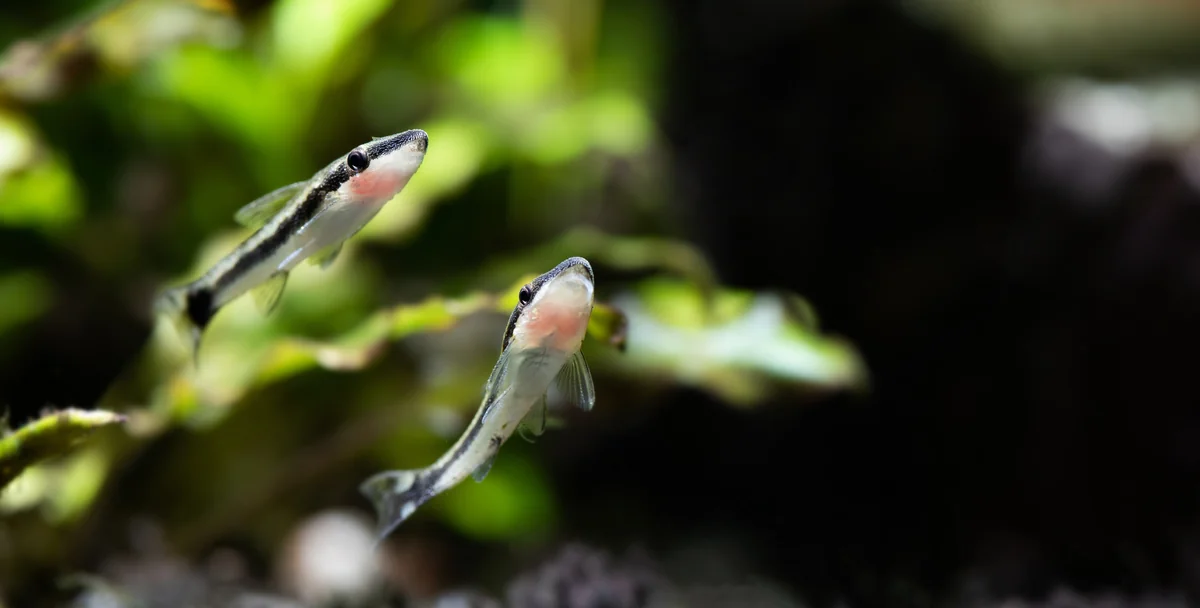
What otocinclus catfish look like and how to sex them
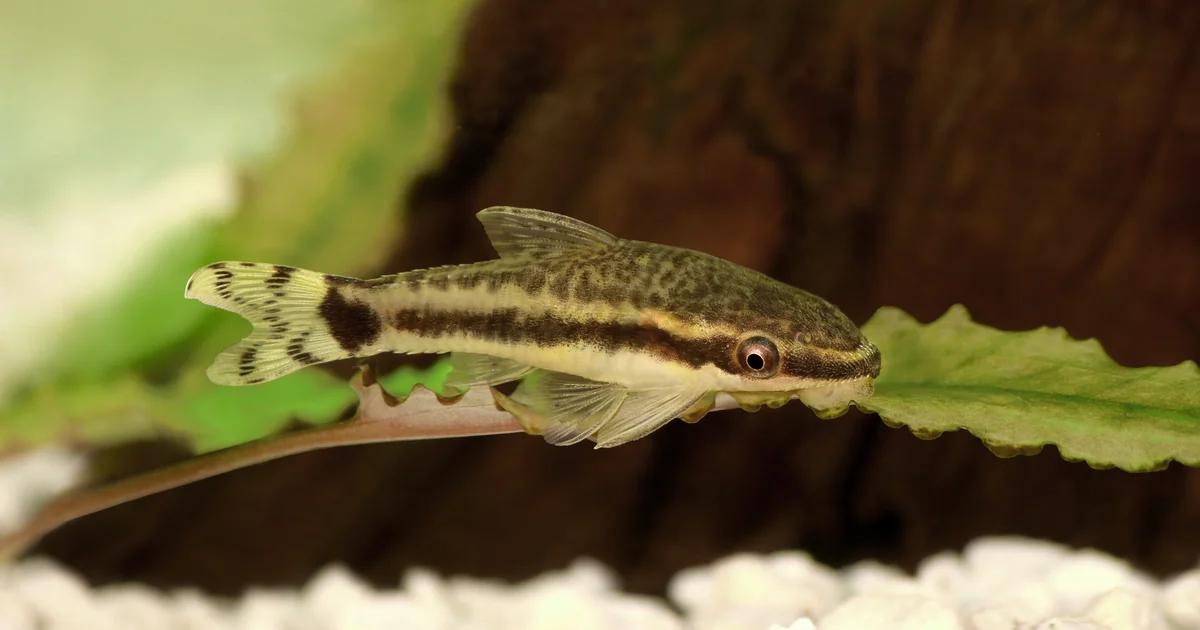
An oto looks like someone shrunk a common pleco down to two inches, lengthened the body slightly, and gave it a single bold black stripe running from snout to tail. The body is dorso-ventrally flattened, the mouth is a small disc on the underside, and the eyes sit high on top of the head. The whole shape is built for clinging to plant leaves and glass, which is exactly what otos do for most of the day. Look at one in a planted tank with the lights at a low angle and you will see them suction-cupped to anubias leaves, hanging upside-down off the underside of driftwood, working their way slowly across the surface and grazing as they go.
Sexing otos with confidence is hard outside of breeding condition. Mature females broaden through the abdomen when carrying eggs, and viewed from above they are visibly wider than males of the same length. Males stay slim. In juvenile or non-breeding adult fish, there is no reliable visual difference, which is why the practical recommendation if you want pairs is to buy a group of six or more and let them sort themselves out.
Color varieties commonly sold
Most otos sold under the generic “oto” label are common otocinclus, but four named varieties show up regularly enough to be worth knowing apart. Care is identical across the group except for the slight size difference in zebra otos.
| Variety | Description |
|---|---|
| Common Otocinclus (O. vittatus, O. macrospilus) | The default oto. Tan body with a single horizontal black stripe. Tops out near 1.75 inches. Care is identical across the two species and most stores do not differentiate them at point of sale. |
| Zebra Otocinclus (O. cocama) | Vertical black bars on a pale body instead of a single horizontal stripe. Slightly stockier and reaches the full 2-inch end of the size range. Often double the price of common otos. |
| Golden Otocinclus (O. affinis) | Lighter yellow-gold base color with a less pronounced lateral stripe. Same size and temperament as common otos. Less commonly available. |
| Dwarf Otocinclus (various species sold loosely) | A trade label for the smallest individuals in the genus, usually around 1.25 to 1.5 inches. Care is identical to common otos. |
Otocinclus tank setup: tank size, filtration, heating, water, substrate
An oto tank needs five things going for it before the fish go in. None of them are exotic. The one rule that catches beginners out is the mature-tank requirement: cycling alone is not enough, because otos depend on biofilm and soft diatom growth that takes a few weeks beyond the cycle to develop.
Tank size
Ten gallons is the practical minimum for a school of six otos. Twenty gallons is better because it gives the school more grazing surface and more buffer against parameter swings, both of which matter for a species this sensitive. Anything below 10 gallons does not produce enough biofilm to sustain a healthy school, regardless of how much supplemental food you add. If you only have room for a single oto or two, do not buy otos. Buy nerite snails or amano shrimp instead.
Beyond size, the tank needs to be cycled AND established for at least four to six weeks before otos go in. Cycling builds your nitrifying bacteria. Biofilm and soft diatom growth on glass, plants, and driftwood take another two to four weeks after that to develop. Tanks under six weeks old simply do not feed otos, regardless of what you add to the water column. If you cycled in three weeks, wait another three weeks. Cross-reference our how to set up your first aquarium guide for the full cycling timeline.
Filtration
Low to moderate flow. A sponge filter or a hang-on-back filter with a foam pre-filter both work well. Otos can get pulled against high-flow intakes the same way fry can, so cover the intake either way. For 10 to 20 gallon nano builds, see our best small aquarium filters guide for shrimp-compatible options that work for otos too.
Heating
A 50 to 75 watt heater for a 10 to 20 gallon tank, set to hold the water in the 72 to 79°F range. Otos prefer the cooler end of the tropical range and struggle long-term above 80°F, so they are not a good cleanup-crew choice for discus or angelfish tanks that run hotter.
Water conditions
| Parameter | Target Range |
|---|---|
| Temperature | 72 to 79°F (22 to 26°C) |
| pH | 6.0 to 7.5 |
| General hardness (GH) | 2 to 15 dGH (soft to moderate) |
| Carbonate hardness (KH) | 3 to 10 dKH |
| Ammonia | 0 ppm. Otos die before tetras even start gasping. |
| Nitrite | 0 ppm |
| Nitrate | Under 20 ppm long-term. Weekly 25 to 30 percent water changes. |
Substrate and decorations
Sand or smooth fine gravel. Otos rest on the bottom often and their soft underside skin scrapes easily against sharp gravel. Driftwood, rocks, and live plants are mandatory, not decorative. Every surface in the tank is a potential grazing area, and more surface area means the biofilm can sustain the school longer between supplemental feedings. Broad-leaved plants like anubias, java fern, and amazon swords work especially well because their leaves stay clean enough for otos to graze across without dying back. Moderate planted-tank lighting is the sweet spot: otos prefer dim to moderate light because their wild habitat is shaded forest stream, and that light level also grows the soft brown diatom film they actually eat.
What do otocinclus catfish eat? The biofilm dependence problem
Otos eat biofilm, soft brown diatom film, and green dust algae. They do NOT eat hair algae, black beard algae, green spot algae on hard surfaces, or staghorn algae. If you bought otos to clear a green algae infestation, you bought the wrong fish. They are a maintenance grazer for already-healthy planted tanks, not a fix for an algae bloom.
Because biofilm regrows slowly and the tank can only support so much grazing at once, otos need supplemental food two to three times a week. The proven options sit in a small set.
| Food | Type | Notes |
|---|---|---|
| Blanched zucchini, cucumber, spinach | Fresh vegetable | Boil for 60 seconds, weigh down with a fork or a fishing weight, and remove within 24 hours to prevent the tank fouling. Otos take a few days to start accepting fresh veg; do not give up after one ignored cucumber slice. |
| Hikari sinking wafers for catfish, loaches, and bottom feeders | Commercial sinking pellet | Widely accepted and break down slowly enough that the whole school gets a chance to feed. Reliable staple supplement. |
| Repashy Soilent Green or Morning Wood gel food | Powdered-to-gel formulation | Strong acceptance from oto schools and a better nutritional profile than algae wafers alone. Mix powder with hot water, let set in the fridge, and feed in small cubes. |
| Algae wafers (any reputable brand) | Commercial sinking wafer | Useful as a backup. Acceptance is lower than the options above, but works well in tanks shared with other bottom feeders that will pick up the slack. |
If you want a single pellet to keep in the cabinet, the
![Hikari Tropical Sinking Wafers for Catfish, Loaches and Bottom Feeders 3.88 Ounces [2-Pack]](https://m.media-amazon.com/images/I/71wojil3+nL._AC_SX466_.jpg)
The belly-shape check you used at the store is the daily check in your own tank. If your school has rounded bellies, you are feeding enough. If bellies are flat, increase supplementation or check whether you have been over-cleaning your biofilm-producing surfaces. The instinct to scrub the brown film off the glass is exactly the instinct to suppress with this species.
Best otocinclus tank mates (and what to avoid)
Otos are strictly peaceful, completely safe with shrimp including shrimplets, and ignored by most other fish. They are slow-moving and bottom-bound, which makes them poor tank mates for anything aggressive or anything that competes hard for biofilm. Aim for nano-community-tank species that share their water preferences and occupy different parts of the tank.
| Species | Compatibility | Notes |
|---|---|---|
| Cherry shrimp and other neocaridina | Good | Otos ignore shrimp completely, including shrimplets. One of the best fish-plus-shrimp combinations in the freshwater hobby. |
| Amano shrimp | Good | Different algae targets (amanos go after hair algae and BBA, otos stay on soft biofilm) so the two pair well. See amano shrimp care for the husbandry. |
| Nerite snails | Good | Target a different algae niche and cannot breed in freshwater, so there is zero competition and no risk of overpopulation. |
| Ember tetras, chili rasboras, harlequin rasboras | Good | Peaceful schoolers with similar water requirements. They stay in the upper and middle water column, leaving the substrate to the otos. |
| Pygmy corydoras | Good | Peaceful bottom-tier addition that takes sinking pellets and leaves the biofilm alone. |
| Sparkling gourami | Caution | Usually fine but individual temperament varies. Honey and dwarf gouramis are size-borderline for nano tanks. |
| Bettas (male) | Caution | Some bettas ignore otos, others harass them. Provide hiding spots and be ready to separate if the betta starts chasing. |
| Bristlenose pleco in the same tank | Caution | Bristlenose are aggressive biofilm eaters and will out-compete otos in tanks under 30 gallons. Workable only with abundant grazing surface. |
| Tiger barbs, serpae tetras, other fin nippers | Avoid | Otos are slow and bottom-bound, which makes them easy targets for nippers. |
| Any cichlid (including small ones) | Avoid | Territorial pressure and direct aggression. Otos do not survive long in a cichlid tank. |
| Common pleco, sailfin pleco | Avoid | Will dominate the biofilm aggressively and outgrow nano tanks anyway. See our pleco care guide for tank-size matching. |
| Any predatory or semi-aggressive fish over 3 inches | Avoid | Otos are bite-sized snacks for anything that hunts small fish. |
Otocinclus vs bristlenose pleco: which algae grazer should you pick?
If you are weighing otocinclus against bristlenose pleco for small-algae duties, the two species have very different operating ranges despite sitting in the same family. The comparison below maps what each does well and where each falls short.
| Feature | Otocinclus | Bristlenose Pleco |
|---|---|---|
| Adult size | 1.5 to 2 inches | 4 to 5 inches |
| Minimum tank | 10 gallons (school of 6) | 20 to 30 gallons (one fish) |
| Schooling | 6+ mandatory | Solitary, or 1 male + 1 female |
| Algae diet | Biofilm and soft brown diatom only | True algae eater including green spot |
| Waste output | Very low | Moderate to high |
| Best for | Nano planted tanks, especially shrimp tanks | Mid-size community tanks |
| Cycling tolerance | Mature tank only | Tolerates a less-mature tank |
Otos win in nano tanks under 20 gallons where their small size and zero shrimp threat let them slot into any peaceful planted community. Bristlenose plecos win in 20 gallon and larger community tanks where their broader algae-eating range matters more than their larger footprint and waste output.
Common otocinclus diseases and how to treat them
A healthy oto has a rounded belly, clear eyes, intact fins, and an active grazing pattern across multiple surfaces. The fish moves between glass, plants, and driftwood throughout the day rather than sitting in one spot. If yours stop grazing and start clinging in one place, something is wrong even if no other symptom is visible yet.
| Condition | Symptoms | Treatment |
|---|---|---|
| Starvation and wasting | Flat or concave belly, lethargy, reduced grazing. By far the most common cause of death in the first month. | Increase supplemental feeding to daily for two weeks. Add more grazing surfaces (driftwood, plants). If the tank is genuinely too new, borrow established hardscape from another tank or move otos to a more mature tank if you have access. |
| Ich (white spot disease) | Visible white grains on body and fins, flashing against decor. | Use a heat-and-salt protocol (raise temperature to 82°F for two weeks plus aquarium salt at one teaspoon per gallon) or a HALF-DOSE copper-based medication. Loricariids are sensitive to full-strength copper. |
| Internal parasites | Eating well but losing weight. Stringy white feces. Fish gradually thins despite full bellies. | Treat the quarantine tank with levamisole or fenbendazole at the bottle dosing. Very common in wild-caught otos. |
| Fin rot | Frayed or whitening fin edges, sometimes with red inflammation at the base. | Increase water-change frequency and verify ammonia and nitrite are both zero. Antibiotics rarely needed if water quality gets fixed early. |
| Ammonia or nitrite burn | Red or inflamed gills, gasping at the surface, sudden mass die-off in a school that was healthy yesterday. | Immediate 50% water change. Test daily until parameters stabilize. Otos are among the most ammonia-sensitive community fish. |
Prevention is mostly about water quality and feeding. Test ammonia, nitrite, and nitrate weekly. Do 25 to 30 percent water changes weekly. Feed supplements two to three times a week. Avoid medications that contain copper unless you halve the dose. Skip the quarantine step only if you can verify the source tank is locally bred and disease-free, which is essentially never for otos.
Breeding otocinclus at home: rare but possible
Captive breeding of otocinclus is documented but uncommon. The triggers are a 3 to 5°F temperature drop over a few days (mimicking the Amazon rainy season), heavy planting, soft acidic water with pH below 6.5, and an extended period of high-biofilm conditions. Eggs are laid on broad leaves and on the glass. Fry feed on biofilm directly from the same surfaces the adults use, which is why a heavily biofilm-loaded tank is the prerequisite for any breeding attempt at all.
For context, almost every oto in the trade is wild-collected from Brazil, Peru, and Colombia. Captive breeding is a specialist activity rather than a casual hobby project, and conservation-minded keepers sometimes pursue it specifically to reduce dependence on wild collection. Do not buy otos expecting to breed them.
Otocinclus care FAQs
How many otos for a 10 gallon tank?
Six is the welfare minimum, eight is more confident, and ten is the upper limit for a 10 gallon. Do not keep otos in groups smaller than six even in a smaller “just one” setup; they need the school to feed normally and reduce stress.
Why are my otos dying?
In rough order of likelihood: the tank is too new and biofilm has not established; the fish arrived from the store already starving (sunken belly at purchase); an ammonia or nitrite spike during the first weeks; untreated parasites from wild collection; a copper-based medication used at full dose.
Can otos live with bettas?
Sometimes. Individual betta temperament varies. Some bettas completely ignore otos, others harass them. Set up the tank so the betta has its own territory and the otos have hiding spots, and be prepared to separate them if the betta starts chasing.
Will otos eat hair algae or black beard algae?
No. Otos eat only soft biofilm and diatom film. For hair algae, manual removal plus amano shrimp work better. For black beard algae, hydrogen peroxide spot treatment plus amano shrimp is the proven approach.
Do otos need a heater?
Yes, but a smaller one than most tropicals. Keep the tank in the 72 to 79°F range. Without a heater your tank will likely drop below 70°F in winter, which slows their metabolism and makes them more disease-prone.
Is an otocinclus catfish right for your tank?
Otos are the right fish for you if you have a mature planted tank that is at least six weeks old, you can commit to a school of six or more, you accept that 20 to 30 percent intake mortality is normal even with perfect care, and you want a peaceful grazer that will not harm shrimp. They are the wrong fish if your tank is brand new, you want an algae cleanup crew that will fix an existing bloom, you only have room for one or two grazers, or you cannot supplement their diet consistently. In those cases, nerite snails or amano shrimp are better picks for nano tanks, and a bristlenose pleco is the better pick for community tanks 20 gallons and up.
When the setup is right, otos are one of the most rewarding small fish in the freshwater hobby. The school keeps your plant leaves clean of brown diatoms, the fish are oddly charming to watch as they suction-cup their way around the tank, and they slot into shrimp tanks where almost no other fish belongs. The whole investment is the four to six weeks of patience getting the destination tank right. Spend that time and your otos will pay you back for the next three to five years.