Disclosure: This post contains affiliate links. If you purchase through a link on this page, we may earn a small commission at no extra cost to you. We only recommend products we’d use in our own tanks.
Most people who lose plants in the first few months blame lighting or fertilizers. The substrate was the problem the whole time. Roots need more than something to anchor into – they need a material that holds nutrients, stays stable over time, and doesn’t swing water chemistry in unpredictable directions. Get that wrong and no amount of liquid fertilizer will compensate.
This guide covers everything you need to make the right call: substrate types, specific product picks with honest tradeoffs, how much you actually need for your tank size, common mistakes, and long-term maintenance. If you’re setting up a low to medium-tech planted tank between 10 and 55 gallons, this is written for you.
What Substrate Actually Does (and Why It Matters More Than Most Beginners Expect)
In a planted tank, substrate does four things: it anchors plant roots, stores and releases nutrients, hosts beneficial bacteria, and can influence water chemistry. Plain decorative gravel does only the first. That’s a significant gap.
Plants like Cryptocorynes, Amazon swords, and most stem plants are heavy root feeders. They’ll stall in an inert substrate unless you’re constantly dosing the water column at levels that also fuel algae. You’re fighting against your own setup.
Substrate depth also matters more than most beginners expect. You need a minimum of 3 inches for most rooted plants. Large swords want 4 inches or more. Less than that and roots hit the bottom glass, curl, and eventually rot – and root rot works backward toward the crown before you ever notice anything wrong with the leaves. Getting depth right from day one costs nothing extra. Fixing it later means tearing the whole tank down.
Types of Substrate: The Real Tradeoffs
There are five main categories most planted tank hobbyists work with. Each has a different performance profile and failure mode.
| Substrate Type | Nutrient Content | pH Impact | Lifespan | Est. Cost (20gal) | Best For |
|---|---|---|---|---|---|
| Plain Gravel / Sand (inert) | None | Neutral | Indefinite | $8-15 | High-tech CO2 tanks, decorative setups |
| Active Aquasoil (e.g., ADA Amazonia, Landen) | High | Lowers pH to 6.0-6.8 | 2-4 years | $30-60 | Low-tech planted, shrimp tanks |
| Clay Gravel (e.g., Seachem Fluorite) | Moderate (slow release) | Neutral | Indefinite | $25-40 | Long-term planted tanks, water column dosing |
| Mineral Mix (e.g., CaribSea Eco-Complete) | Moderate | Slightly lowers | 2-3 years | $25-35 | Beginner setups, easy planted tanks |
| Dirted Tank / Walstad Method | Very High | Variable | 5+ years | $10-20 | Low-tech, budget-conscious planted tanks |
Active vs. Inert: What It Means in Practice
Active substrates alter water chemistry – typically lowering pH and releasing nutrients. They produce dramatic plant growth early on but require a proper cycling period and eventually break down. Inert substrates don’t change water chemistry at all, which makes them more predictable and easier to manage long-term, but they need supplementation to feed root-hungry plants.
The real differentiator between active and inert substrates is something called cation exchange capacity (CEC). In simple terms, CEC measures how well a substrate can grab nutrients from the water and hold them near plant roots. Active aquasoils have a CEC around 40-50. Seachem Fluorite sits around 1.5-2. Plain gravel is essentially zero. This is why a $30 bag of aquasoil outperforms $30 of premium gravel for root feeders – it’s not marketing, it’s chemistry.
Complete vs. Compound
A complete substrate goes straight into the tank from the bag… no layering needed. A compound substrate (like potting soil for the Walstad method) needs to be capped with gravel or sand to prevent it from clouding the water column. Both approaches work; they just require different setup steps.
The Best Substrates for Planted Tanks in 2026
Best Long-Term Inert Substrate: Seachem Fluorite Black
Best Use: Low to medium-tech tanks running water column dosing + root tabs. Ideal for aquarists who want a substrate they’ll never need to replace.
Seachem Fluorite is a naturally porous clay gravel that releases nutrients slowly into the root zone over a very long period. Unlike active aquasoils, it doesn’t lower pH, doesn’t leach ammonia, and won’t break down into mush after a few years. You can add it to an established tank without disrupting water chemistry – a rare quality. The black coloring is completely natural, with no dyes or chemical coatings.
The honest caveat: Fluorite stones are not rounded. The edges are irregular and can be sharp enough to damage soft roots and delicate bottom-dweller fins. Rinse it extremely thoroughly before use or your water will stay cloudy for days.
Pros
- Lasts indefinitely, never needs replacing
- No pH impact, safe for established tanks
- No ammonia leach, no cycling concerns
- Natural black coloring, no coatings
Cons
- Sharp irregular edges which is risky for soft roots and Corydoras
- Requires extensive rinsing before use
- Needs root tabs for heavy root feeders
- Low CEC compared to active soils

Stable Porous Natural Planted Aquarium Substrate 15.4 lbs
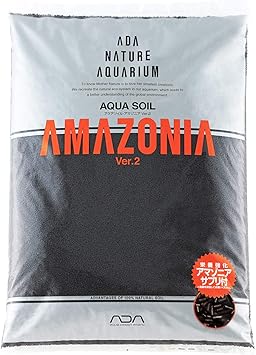
Best Premium Active Soil: ADA Aqua Soil Amazonia Ver.2
Best Use: Dedicated planted tanks and aquascapes where maximum plant growth is the priority. The gold standard for competition-level setups.
ADA Amazonia is the substrate that defined modern planted tank keeping. The Ver.2 update uses rare Japanese black soil as its base material and comes with Amazonia Supplement pellets – nitrogen-rich additions you layer underneath the soil for an even deeper nutrient reserve. The dark black color makes green plants pop, and the granule size supports strong root development across everything from carpeting plants to large swords.
The Ver.2 addressed the biggest complaints about the original Amazonia: water discoloration and extreme ammonia spikes during cycling. It’s significantly easier to manage during setup than the original formula. That said, it still leaches ammonia for the first 2-3 weeks – you absolutely need to cycle before adding livestock. And at roughly double the price of Landen or Fluval Stratum, it’s a real investment. The performance justifies the cost for serious planted setups, but if you’re running a casual community tank with a few easy plants, it’s overkill.
Pros
- Highest CEC of any commercial substrate (~45-50)
- Includes nutrient supplement pellets for layering
- Far less water discoloration than original Amazonia
- Industry standard for competitive aquascaping
Cons
- Expensive – roughly $30-35 for a 9L bag
- Still leaches ammonia; must cycle 2-4 weeks
- Breaks down after 2-4 years, eventually needs replacing
- Overkill for low-demand plants (Anubias, Java fern)
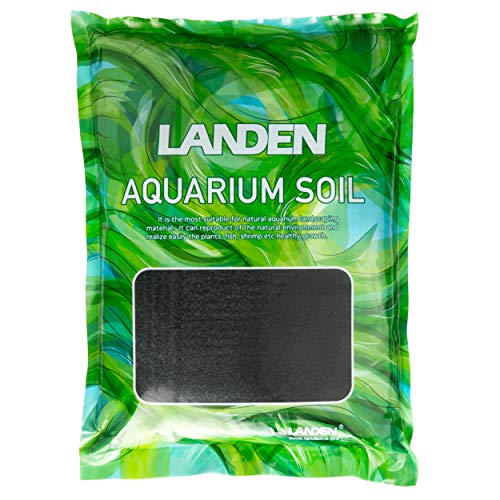
Best Value Active Soil: Landen Aquarium Soil
Best Use: Planted tanks and shrimp setups needing nutrient-rich substrate with gentle pH buffering. Good value alternative to premium Japanese brands.
Landen Aquarium Soil is a well-regarded active substrate among hobbyists who want the performance of premium aquasoils without paying ADA Amazonia prices. Made from natural soil materials, buffered to gently lower pH into the range most aquatic plants and shrimp prefer, and comes in uniform porous granules that both anchor plants and support beneficial bacteria colonization.
Like all active soils, it will cloud water initially if disturbed carelessly during fill. The nutrient content will diminish over 2-3 years – plan on root tab supplementation as the substrate matures. For most hobbyists building a moderately planted tank, Landen gives you 80-90% of ADA’s performance at roughly half the cost.
Pros
- Good nutrient content for early plant establishment
- Gentle pH buffering, good for shrimp
- Better value than ADA Amazonia
- Available in multiple bag sizes
Cons
- Initial ammonia leach – cycle before adding livestock
- Water clouding if filled carelessly
- Nutrient content diminishes after 2-3 years
10lbs bag. Made for Natural Planted Aquarium, Plant or Shrimp Stratum, Clay Gravel and Stable Porous Substrate for Freshwater Aquarium, Black Color
Best for Shrimp & Nano Tanks: Fluval Plant and Shrimp Stratum
Best Use: Shrimp-forward planted tanks and nano aquascapes where pH buffering and fry-safe interstitial spaces matter most.
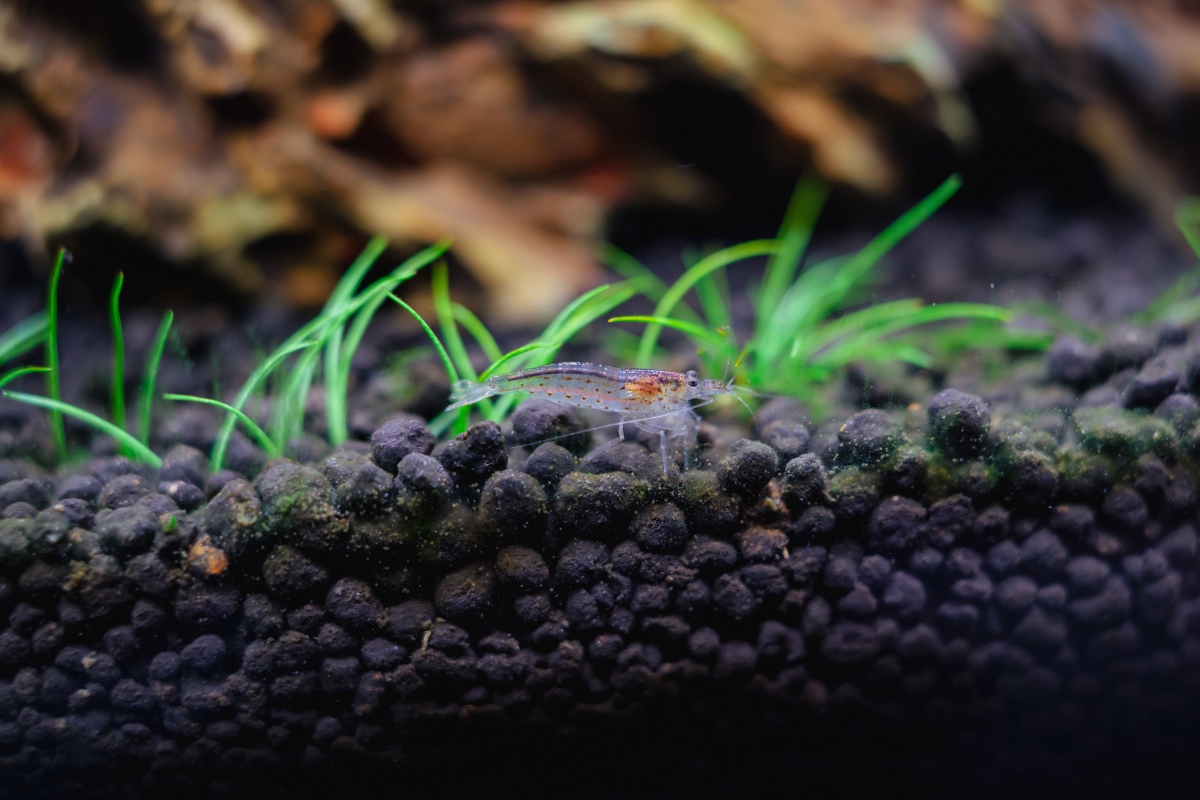
Fluval Stratum is made from volcanic soil and specifically designed with shrimp in mind. The light, porous granules lower pH to the slightly acidic range most shrimp and tropical plants prefer, and the small grain size makes it easy for shrimp fry to navigate without getting trapped.
The weight is the real tradeoff. Fluval Stratum is genuinely lightweight – a gravel vacuum or python cleaner will suck it right up if you’re not careful during water changes. It’s also one of the more fragile active soils and breaks down faster than denser options.
Pros
- Great for shrimp breeding – fry-safe grain spacing
- Lowers pH gently, good for soft-water plants
- Available in 3 bag sizes for any tank
Cons
- Very lightweight – easily disturbed by siphons
- Breaks down faster than other options
- Cycle fully before adding shrimp

17.6 lbs. Aquarium Substrate for Strong Plant Growth, Supports Neutral to Slightly Acidic pH
Best Beginner-Friendly Complete Substrate: CaribSea Eco-Complete
Best Use: Beginners who want a plug-and-play substrate that requires zero prep and supports solid plant growth out of the box.
CaribSea Eco-Complete is made from basaltic volcanic soil packed with iron, calcium, magnesium, potassium, sulfur, and 25 additional trace minerals. It comes wet in a sealed bag that contains live beneficial bacteria – which helps new tanks cycle faster. No rinsing, no prep, no waiting. Pour it in and plant.
The downsides are worth knowing: the fine granules can be difficult to plant stem plants in since they don’t anchor as firmly as heavier substrates. And while Eco-Complete technically contains minerals, its CEC is moderate at best – it won’t hold nutrients the way a true aquasoil does. Think of it as a solid middle ground between inert gravel and active soil.
Pros
- No rinsing or prep – use right from the bag
- Arrives with live bacteria to speed cycling
- Rich mineral content supports plant roots
- Works as a single substrate or layered
Cons
- Frequently out of stock
- Fine granules get vacuumed up easily
- May not anchor new stem plants firmly
- Moderate CEC – won’t hold nutrients like aquasoil
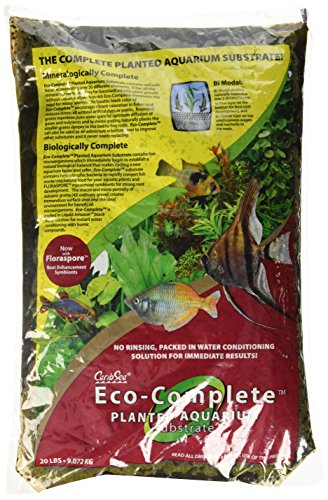
20-Pound Planted Aquarium, Black
Best Budget Setup: The Walstad / Dirted Tank Method
Best Use: Low-tech, low-cost planted tanks where you want years of plant growth with minimal ongoing investment.
The Walstad method uses plain organic potting soil capped with sand or fine gravel. The soil provides a massive nutrient reserve that feeds root systems for 5 or more years without additional fertilization. A 10-lb bag of Miracle-Gro Organic soil costs around $8. Combined with a $10 bag of pool filter sand, your entire substrate runs under $20 – versus $40-60 for a comparable volume of active aquasoil.
Setup ratio: 1 inch of soil, capped with 1.5 to 2 inches of sand or fine gravel. Use plain organic potting soil only – anything with slow-release synthetic fertilizer beads causes persistent ammonia and algae problems for months.
Pros
- Cheapest possible substrate – under $20 total
- Massive long-term nutrient reserve (5+ years)
- No root tabs, minimal ongoing fertilization
- Proven method since the late 1990s
Cons
- 4-6 week unstable period requires active management
- Wrong soil = months of algae problems
- Not great for tanks you’ll rearrange frequently
- Disturbing the cap exposes soil and clouds water
How Much Substrate Do I Need?
This is one of the most common questions – and most product listings make it harder than it needs to be by mixing liters, pounds, and kilograms. Here’s a straightforward reference chart for common tank sizes at a 3-inch depth, which is the minimum recommended for most planted setups.
| Tank Size | Dimensions (L×W) | Volume Needed | Bags of Aquasoil (9L) | Bags of Fluorite (15.4 lb) | Est. Cost Range |
|---|---|---|---|---|---|
| 10 gallon | 20″ × 10″ | ~10L | 1-2 | 1 | $15-35 |
| 20 gallon long | 30″ × 12″ | ~18L | 2 | 2 | $25-60 |
| 29 gallon | 30″ × 12″ | ~18L | 2 | 2 | $25-60 |
| 40 breeder | 36″ × 18″ | ~32L | 3-4 | 3 | $45-100 |
| 55 gallon | 48″ × 13″ | ~31L | 3-4 | 3 | $45-100 |
| 75 gallon | 48″ × 18″ | ~43L | 5 | 4 | $65-140 |
Based on a uniform 3-inch depth. Add 20-30% more if you plan to slope substrate higher in the back for aquascaping depth. Prices reflect 2026 Amazon pricing and will vary.
The quick formula if your tank isn’t listed: (Length × Width × Depth in inches) ÷ 61 = liters needed. Always round up – running short mid-setup is worse than having a partial bag left over.
What Typically Goes Wrong (And How to Avoid It)
Cheap inert gravel as the only substrate. Inert gravel gives plant roots nothing to work with. Plants might survive on water column nutrients alone for a few weeks, but they’ll never thrive. You’ll spend more on liquid fertilizers and root tabs than you would have on a proper substrate to begin with.
Using garden or outdoor topsoil in a dirted tank. Garden soil is unpredictable – it can contain pesticides, weed seeds, and nutrient levels that fuel weeks-long algae blooms. Always use plain indoor potting soil. Test a small amount in a container of water first and check for unusual smells or color leaching after 24 hours.
Inadequate depth. Planting an Amazon sword in 2 inches of substrate sets it up to fail within 3 months. The roots hit the glass bottom, bend, and begin to rot. Minimum 3 inches everywhere. Four inches for large rosette species and heavy stem plants.
Rushing livestock into a new active substrate tank. Fresh active soil leaches ammonia – sometimes 2 to 4 ppm – for 2 to 4 weeks. Cycle fully and confirm three consecutive days of zero ammonia readings before adding anything sensitive.
Mixing incompatible substrates without separation. Layering active aquasoil under a sand cap seems logical, but over time fish and plant roots mix the layers, creating an uneven mess that’s impossible to maintain. If you want to use multiple substrates, separate them physically with hardscape (rocks, wood) rather than layering vertically.
Long-Term Substrate Maintenance
After the first year, most substrates need some attention. Root tabs become necessary in inert substrates immediately, and in active substrates past the 2-year mark. A standard tab every 6-8 weeks per heavy root feeder is a reasonable baseline. Place them 2-3 inches from the base of the plant – not directly under the crown where they can burn the roots.
Vacuuming in a planted tank requires a different approach than in a fish-only tank. Skim the surface lightly to pull up mulm and uneaten food, but don’t push the vacuum deep into the substrate. In a heavily planted tank, organic buildup in the substrate feeds the root zone. Aggressive gravel vacuuming is one of the main reasons planted tanks decline at the 12-18 month mark even when everything else looks right.
Knowing when your active soil is spent: If your plants start showing nutrient deficiency symptoms (yellowing older leaves, stunted new growth) despite consistent water column dosing, and root tabs aren’t resolving it, your aquasoil has likely exhausted its nutrient capacity and CEC. At that point you have two options: supplement heavily with root tabs and accept reduced performance, or plan a rescape with fresh substrate. Most active soils hit this point somewhere between years 2 and 4, depending on plant load and how heavily you stock the tank.
Frequently Asked Questions
Can I use regular aquarium gravel for a planted tank?
You can, but plain gravel provides zero nutrition to plant roots and will require consistent root tab supplementation every 6-8 weeks to keep root-feeding plants alive. For easy column-feeding plants like Anubias or Java fern, gravel works fine since those species don’t rely on substrate nutrients at all.
My new planted tank has an ammonia spike – is the substrate causing it?
Yes, if you’re using an active substrate like ADA Amazonia, Landen, or similar products, ammonia release in the first 2-4 weeks is normal and expected. Do not add fish or shrimp until the tank has fully cycled and ammonia reads at zero – confirmed with daily testing over at least 3 consecutive days. Plants can go in immediately; they actually help absorb the ammonia and stabilize the tank faster.
How deep should substrate be in a planted aquarium?
Minimum 3 inches for most rooted plants. Large rosette species like Amazon swords want 4 inches or more. Carpeting plants in the foreground can manage with 2 inches. Many aquarists slope the substrate – shallower in front for aesthetics, deeper in the back where tall plants are placed.
Is expensive substrate always better for planted tanks?
Not at all. A properly set up dirted tank using $8 of organic potting soil and $10 of pool filter sand regularly outperforms a $60 bag of active aquasoil in long-term plant growth and stability. Cost has nothing to do with those results – setup technique does.
What’s the best substrate for a planted shrimp tank?
For Neocaridina shrimp, Seachem Fluorite or CaribSea Eco-Complete work well since both are relatively pH-neutral. For Caridina shrimp (Crystal Red, Taiwan Bee), you need an active soil that lowers pH into the 5.8-6.5 range – Fluval Stratum or Landen Aquarium Soil are both good choices. Cycle fully before adding any shrimp.
How soon after adding new substrate can I introduce plants and fish?
Plants can go in right away – planting heavily at the start helps absorb excess ammonia and speeds up cycling. Fish and shrimp should wait until ammonia and nitrite have both read zero for at least 3 consecutive days. With active substrates, this typically takes 2-4 weeks.
ADA Amazonia vs. Landen – is the price difference worth it?
For most hobbyists, Landen gives you 80-90% of ADA’s performance at roughly half the cost. ADA’s edge shows in competition-level aquascapes where maximum growth rates and the included supplement pellets make a noticeable difference. If you’re building a showcase tank or keeping demanding carpet plants like HC Cuba, ADA justifies the premium. For a standard planted community tank, Landen is the smarter buy.
Can I add aquasoil to an already established tank?
You can, but it’s messy and risky. Adding active soil to a tank with fish means introducing an ammonia source directly into their environment. If you must do it, add small amounts at a time, monitor ammonia daily, and be prepared for increased water changes. A safer approach is to use root tabs to boost an existing inert substrate rather than layering aquasoil on top.
Final Recommendation
For most hobbyists setting up their first or second planted tank, Seachem Fluorite is the safest long-term choice. It’s stable, permanent, doesn’t require cycling, and can be supplemented with root tabs as your plants mature. If you want faster early growth and plan to keep shrimp, Landen Aquarium Soil offers the best balance of performance and value among active substrates. For serious aquascapers building a dedicated planted setup, ADA Amazonia Ver.2 remains the gold standard – the performance is unmatched if you’re willing to invest the time and money. And if you’re on a budget and willing to put in careful setup work upfront, the Walstad dirted tank method will outperform everything else here over a 5-year horizon.
Whatever you choose: get the depth right, cycle before adding livestock, and don’t vacuum too aggressively once plants are established. The substrate is the foundation – everything else builds on it.
Once your substrate is sorted, you’ll want to pair it with the right hardware. Check our guides on the best aquarium filters and the best canister filters to complete your setup.
Seachem Fluorite Black Clay Gravel
Long-lasting, pH-neutral, no ammonia leach, never needs replacing. The most reliable all-around choice for planted tank beginners and experienced hobbyists alike.
Stable Porous Natural Planted Aquarium Substrate 15.4 lbs