If you’re wondering what types of fish can live with cichlids, you’ve probably already learned the hard way that tossing random fish into a cichlid tank ends with missing tank mates and a very smug-looking cichlid. I’ve been there. My first attempt at a cichlid community tank lasted about 48 hours before I was fishing out stressed neon tetras with a net and questioning my life choices.
The short answer: medium-sized, semi-aggressive or fast-moving fish that occupy different parts of the tank work best with cichlids. Think Boesemani rainbow fish, clown loaches, plecos, giant danios, and even other cichlid species with similar temperaments. Small, slow, long-finned fish are basically lunch. The specifics depend on whether you’re keeping African cichlids, South American cichlids, or Central American species, because they’re not all the same level of angry.
Let me break down the best options, what actually works, and the mistakes I see people make over and over.
Disclosure: This post contains affiliate links. If you purchase through a link on this page, we may earn a small commission at no extra cost to you. We only recommend products we’d use in our own tanks.
Why Cichlids Are Tricky Tank Mates
Cichlids aren’t “mean” — they’re territorial. There’s a difference. Most cichlid aggression comes down to defending their turf, protecting a breeding site, or establishing a pecking order. Once you understand that, choosing tank mates gets a lot more logical.
Here’s what drives cichlid aggression:
- Territory — Cichlids claim areas of the tank (especially near rocks, caves, and the substrate) and will attack anything that wanders in.
- Breeding — A breeding pair of cichlids becomes significantly more aggressive. Some species become downright psychotic about it.
- Size advantage — If a fish fits in a cichlid’s mouth, it’s food. Period.
- Similar appearance — Many cichlids are more aggressive toward fish that look like them, seeing them as competitors.
The trick isn’t finding peaceful fish to calm the cichlids down. It’s finding fish that either stay out of the way, hold their own, or are too fast and tough to bother with.
Best Tank Mates for Cichlids
Boesemani Rainbow Fish
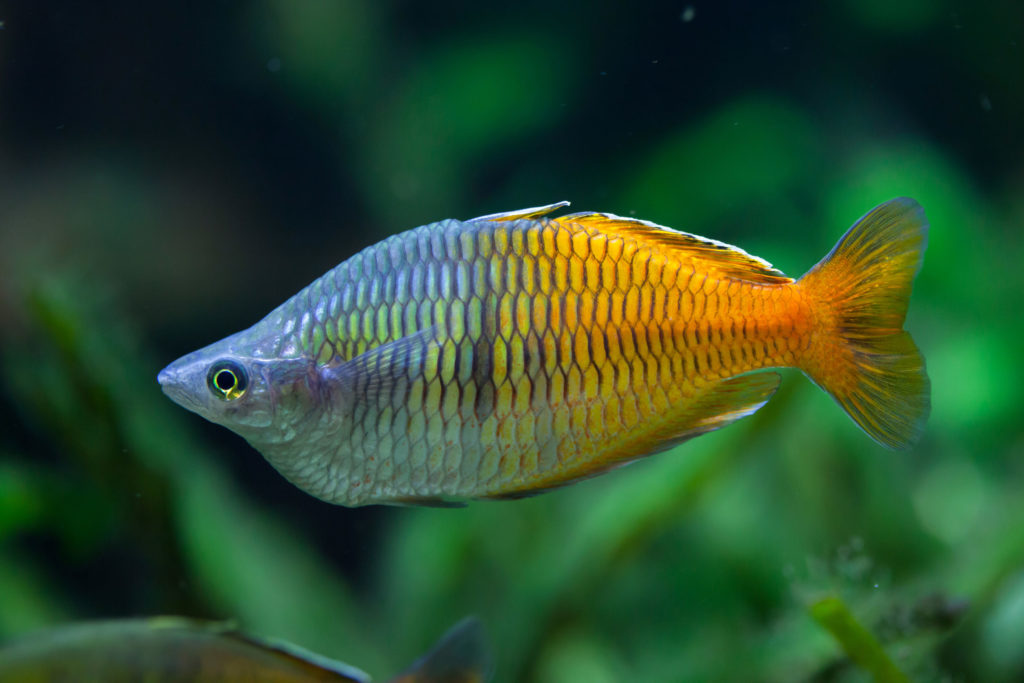
Boesemani rainbows are probably the single best non-cichlid tank mate you can pick. They grow to about 4-5 inches, they’re fast swimmers, they school in the mid-water column (where cichlids generally aren’t patrolling), and they’re peaceful enough to not start fights but robust enough to not get bullied.
They also look incredible — vibrant blue on the front half transitioning to a fiery orange-gold on the back. In a tank with colorful cichlids, the visual effect is genuinely stunning. Keep them in groups of at least 6 so they school properly and feel secure.
Clown Loaches

Clown loaches are bottom-dwellers, which means they naturally avoid the territory most cichlids are defending. They’re big enough to not get eaten (adults reach 8-12 inches), tough enough to handle some aggression, and they mind their own business rooting around the substrate.
The catch: clown loaches need to be kept in groups of 5 or more, and they get big. A school of adult clown loaches needs a 125-gallon tank minimum. If you don’t have that kind of space, this isn’t your fish. But if you do, they’re one of the most reliable cichlid companions out there.
Plecos (Plecostomus)

Plecos are the armored tanks of the aquarium world, and that’s exactly why they work with cichlids. A cichlid can nip at a pleco all day long and accomplish absolutely nothing — that bony plating is basically cichlid-proof. Plecos are peaceful, bottom-dwelling algae eaters that will keep your tank cleaner while staying completely out of your cichlids’ way.
One important note: the common pleco (Hypostomus plecostomus) grows up to 24 inches. That’s two feet of armored catfish. Unless you’re running a 150+ gallon setup, go with a bristlenose pleco instead — they max out around 5 inches and do the same job.
Giant Danios
Giant danios are an underrated cichlid tank mate that more people should consider. They grow to about 4-5 inches, they’re extremely fast swimmers, and they stick to the upper portion of the water column. Cichlids will occasionally chase them, but giant danios are basically impossible to catch in an open-water tank. Keep them in groups of 8 or more for best results.
Silver Dollars
Silver dollars are large, peaceful schooling fish that grow to about 6 inches. Their size makes them too big to eat, and their flat, round shape makes them tough to fit in a cichlid’s mouth anyway. They’re fast, they school in mid-water, and they generally get ignored by even aggressive cichlids. Just know they’ll eat live plants down to the stem.
Other Cichlids
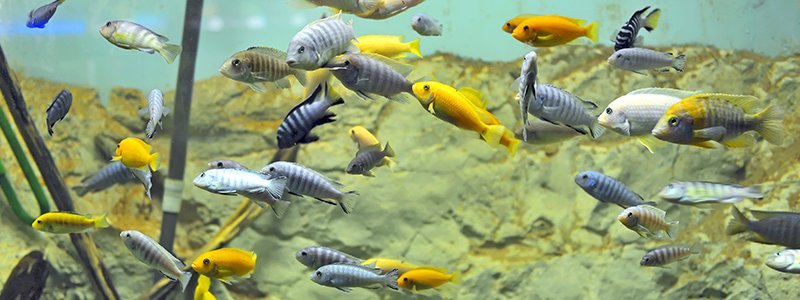
This is where it gets nuanced. You absolutely can keep different cichlid species together — people do it successfully all the time. The key is matching aggression levels and size. A peaceful angelfish with a jack dempsey is a death sentence. But a firemouth with a convict? That can work beautifully in the right setup.
Cichlid species that typically coexist well together include convict cichlids, firemouth cichlids, and many Mbuna species (when kept in an overcrowded Mbuna setup, which actually reduces aggression by preventing any one fish from establishing territory). If you’re keeping angelfish, which are the most peaceful cichlid species, the tank mate rules change significantly since they can go with much calmer community fish.
Cichlid Compatibility Chart
Here’s a quick reference for the most commonly asked-about tank mate combinations. Keep in mind this assumes adequate tank size (55 gallons minimum for most setups) and proper cover with rocks, caves, and driftwood.
| Species | Size | Tank Zone | Compatibility | Notes |
|---|---|---|---|---|
| Boesemani Rainbow | 4-5″ | Mid | Good | Keep in schools of 6+. Fast, stays out of cichlid territory. |
| Clown Loach | 8-12″ | Bottom | Good | Needs 125+ gal. School of 5+. Peaceful bottom-dweller. |
| Bristlenose Pleco | 4-5″ | Bottom | Good | Armored, peaceful, great algae control. Best pleco for most tanks. |
| Giant Danio | 4-5″ | Top/Mid | Good | Extremely fast. School of 8+. Underrated option. |
| Silver Dollar | 5-6″ | Mid | Good | Too big to eat. Will destroy live plants. |
| Convict Cichlid | 4-5″ | All | Caution | Works with similar-sized cichlids. Extremely aggressive when breeding. |
| Firemouth Cichlid | 5-6″ | Mid/Bottom | Caution | More bark than bite. Good with similarly-tempered cichlids. |
| Neon Tetra | 1.5″ | Mid | Avoid | Too small. Will be eaten within minutes. |
| Guppies | 1-2″ | Top/Mid | Avoid | Too small, too slow, long fins attract nipping. Expensive snack. |
| Betta | 2.5-3″ | Top | Avoid | Slow, long-finned, territorial. Worst possible combination with cichlids. |
What Makes a Good Cichlid Tank Mate
Before you buy anything, run potential tank mates through this checklist. If a fish doesn’t pass all four criteria, skip it.
Size
The absolute minimum size for a cichlid tank mate is 3 inches. Anything smaller and you’re buying expensive live food. Ideally, tank mates should be within 2 inches of your cichlids’ size — big enough to not be prey, not so big they become the bully. For larger cichlids like oscars or jack dempseys, you need correspondingly larger tank mates.
Temperament
This is counterintuitive, but slightly aggressive or semi-aggressive fish actually do better with cichlids than purely peaceful ones. A fish that stands its ground when challenged won’t become a permanent target. That said, you don’t want an equally territorial species that will fight your cichlids for every cave and rock — that’s just a war zone. The sweet spot is fish that are assertive but not territorial.
Tank Zone
This is probably the most overlooked factor. Most cichlids patrol the bottom to mid-level of the tank. Fish that live at the top (like hatchetfish, if they were big enough) or at the very bottom in a different area (like plecos) naturally avoid conflict because they’re not in the cichlids’ space. The worst thing you can do is add another bottom-dwelling territorial fish to compete directly with your cichlids for the same caves.
Water Parameters
Cichlids are freshwater tropical fish, so any tank mate needs to thrive in the same conditions — typically 76-82°F, though the pH requirements vary significantly between African cichlids (pH 7.8-8.6, hard water) and South American cichlids (pH 6.0-7.5, soft water). Your tank mates need to share those parameter preferences, not just tolerate them. A fish that “survives” at the wrong pH is a stressed fish, and stressed fish get sick and die.
Setting Up a Cichlid Community Tank for Success
Even with the right tank mates, a poorly set up tank will lead to problems. Here’s what I’ve learned makes the biggest difference.
Tank size matters more than you think. A 55-gallon is the realistic minimum for a cichlid community tank. Anything smaller and there’s not enough space to establish separate territories, which means constant fighting. For bigger cichlid species or mixed cichlid setups, 75-125 gallons is where things actually start working well. If you’re looking at setting up a larger tank, make sure you have the right filtration to handle the bioload — cichlids are messy eaters.
Break up sightlines with hardscape. Rocks, driftwood, and caves are essential. When a cichlid can’t see another fish, it can’t harass it. Create multiple distinct territories with visual barriers between them. I aim for at least one cave or hiding spot per cichlid, plus a few extras so there’s always an unclaimed spot to retreat to.
Rearrange the tank when adding new fish. This is an old trick but it works. When you add new tank mates, rearrange the rocks and decorations. This resets all the territorial boundaries and forces every fish — including the established cichlids — to start from scratch. It dramatically reduces aggression toward newcomers.
Fish to Never Put with Cichlids
Some fish get recommended as cichlid tank mates online and it drives me nuts, because they’re genuinely bad ideas:
- Any fish under 2 inches — Neon tetras, guppies, endlers, celestial pearl danios. These are food, not tank mates.
- Slow-moving, long-finned fish — Bettas, fancy goldfish, fancy guppies. The fins are irresistible targets, and these fish can’t escape.
- Shrimp — Cherry shrimp, amano shrimp, ghost shrimp. All of them are cichlid snacks. Don’t waste your money.
- Snails (with big cichlids) — Some larger cichlids will crack and eat snail shells. Smaller cichlids usually leave them alone, but it’s a risk.
- Corydoras catfish — Too small and too passive. They’ll get bullied relentlessly and stressed to death even if they aren’t eaten.
African vs. South American: Different Rules
I want to emphasize this because it’s the number one mistake I see on forums: African and South American cichlids are not interchangeable. They need different water chemistry, they have different aggression patterns, and the tank mates that work for one group won’t necessarily work for the other.
African cichlids (Mbuna, Peacocks, Haps from Lake Malawi) do best with other African cichlids and hardy fish that tolerate hard, alkaline water. Synodontis catfish are the classic pairing. The Mbuna-specific strategy of overstocking to diffuse aggression is well-documented and works, but it requires serious filtration and maintenance.
South American cichlids (oscars, firemouths, convicts, severums) are generally easier to find compatible tank mates for because more common tropical fish share their soft, slightly acidic water preferences. Silver dollars, giant danios, and plecos are all solid picks here.
For more on keeping peaceful cichlids in a community setup, check out our guide on what types of fish can live with angelfish — since angelfish are cichlids themselves, just far more mellow than their cousins.
Frequently Asked Questions
Can tetras live with cichlids?
Small tetras like neons and cardinals will be eaten. Larger species like Congo tetras (3-4 inches) can work with smaller, less aggressive cichlids like angelfish or keyholes, but they’re still a risk with most medium to large cichlids. I wouldn’t recommend it for most setups.
How many cichlids can I keep together?
It depends on the species and tank size. As a general rule, allow 5-10 gallons per cichlid for smaller species (3-5 inches) and 20-30 gallons per fish for larger species like oscars. Mbuna tanks are the exception — they’re intentionally overstocked with 1 fish per 2-3 gallons to reduce individual aggression.
Can you keep African and South American cichlids together?
No. Their water chemistry requirements are fundamentally different. African cichlids need hard, alkaline water (pH 7.8-8.6), while South Americans prefer soft, acidic water (pH 6.0-7.5). Keeping them together means at least one group is living in water that stresses them, which leads to disease and shortened lifespans.
What’s the best tank size for a cichlid community?
A 55-gallon tank is the minimum I’d recommend for a cichlid community. A 75-gallon gives you much more flexibility with stocking, and a 125-gallon opens up options for larger species like oscars or schools of clown loaches. More space always means less aggression with cichlids.
Do cichlids need tank mates?
No, cichlids don’t need tank mates to be healthy or happy. Many fishkeepers run species-only cichlid tanks successfully. Adding tank mates is about what you want to see in your aquarium, not about the cichlids needing companionship. If you’re new to cichlids, a species-only tank is actually easier to manage while you learn their behavior.
Final Thoughts
The key to picking cichlid tank mates is thinking like the cichlid. If a fish is too small, it’s food. If it’s in the cichlid’s territory, it’s a threat. If it’s slow with flashy fins, it’s a target. The fish that succeed in cichlid tanks are the ones that are big enough to ignore, fast enough to escape, or armored enough to shrug off aggression.
Start with one of the proven options — Boesemani rainbows, bristlenose plecos, or giant danios — and build from there. Give everyone enough space, break up sightlines with rocks and caves, and have a backup plan in case a particular combination doesn’t work out. Every tank is different, and even “compatible” fish sometimes just don’t get along. That’s fishkeeping.
And if you’re still setting up your cichlid tank, make sure you’ve got the basics right first. The right filtration for a large tank makes a bigger difference than any tank mate choice you’ll make.