Disclosure: This post contains affiliate links. If you purchase through a link on this page, we may earn a small commission at no extra cost to you. We only recommend products we’d use in our own tanks.
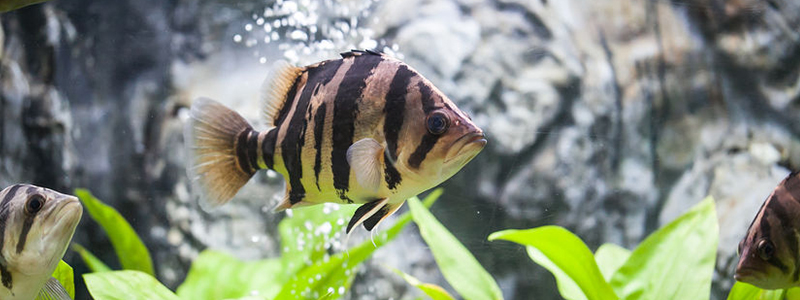
The Datnoid is one of the most striking predatory fish in the freshwater hobby. Bold black stripes on a gold body, a patient ambush hunting style, and a personality that develops over years of keeping make it a favorite among hobbyists who enjoy large, intelligent fish. Many keepers report their datnoids learning to recognize them and eventually feeding from their hands.
That said, datnoids are not beginner fish. They require large tanks, produce heavy waste, can be difficult to transition onto prepared foods, and are known for occasional hunger strikes that last days or even weeks. Most specimens in the hobby are wild-caught, which adds acclimation challenges and a higher price tag compared to captive-bred species.
This guide covers everything you need to keep a datnoid healthy: species identification, tank setup, diet, compatible tank mates, common health problems, and what to expect long-term. If you’re considering adding one to your tank or troubleshooting an existing setup, this is written for you.
Quick Overview
| Attribute | Details |
|---|---|
| Common Names | Datnoid, Tiger Fish, Siamese Tigerfish, Indonesian Tigerfish |
| Scientific Name | Datnioides microlepis (Indo Datnoid, most common in the hobby) |
| Family | Datnioididae |
| Origin | Southeast Asia (Thailand, Indonesia, Mekong basin, Malay Peninsula) |
| Adult Size | 12-16 in (30-40 cm) in captivity; up to 24 in (60 cm) in the wild |
| Lifespan | 10-15 years with proper care |
| Tank Size | 150+ gallons (adults) |
| Temperature | 75-80°F (24-27°C) |
| pH | 7.0-7.5 |
| Temperament | Semi-aggressive, territorial, shy when new |
| Diet | Carnivore (live, frozen, sinking pellets) |
| Care Level | Moderate to Difficult |
Datnoid Fish Appearance
Datnoids have a tall, laterally compressed body with a sharp sloping forehead and bold black vertical stripes. Their base color ranges from gold to silver, with some species showing reddish tones. Unlike many aquarium fish that lose color with age, datnoids maintain their striking pattern throughout most of their lives.
Juveniles are only a few inches long but already display their trademark stripes and tend to show slightly brighter coloring than adults. As they grow, their body shape becomes heavier and more robust. Growth is slow compared to other predatory fish – it can take several years to reach a foot in length, and many don’t hit their maximum size until middle age.
In aquariums, most datnoids top out between 12-16 inches. Wild specimens can exceed 18 inches, with some reports approaching 24 inches. There are no visible physical differences between males and females, which is one reason breeding in captivity has proven virtually impossible.
Types of Datnoids
Several species of datnoid exist, and they’re frequently mislabeled in pet stores. The most reliable way to identify your datnoid is by counting the body stripes and examining the tail fin pattern. Here’s a breakdown of the main types you’ll encounter:
| Species | Also Known As | Identification | Water Type | Availability |
|---|---|---|---|---|
| Indonesian Tiger Fish | Indo Datnoid | 3-4 body stripes, two identical stripes on the tail fin | Freshwater | Most common in the hobby |
| Siamese Tiger Fish | Wide Bar Datnoid | 3 main body stripes, two uneven tail fin stripes | Freshwater | Rare and expensive |
| Northern Thailand Tiger | Thin Bar Datnoid | Broad straight stripes, bright golden to yellowish hue | Freshwater | Rare |
| American Tiger Fish | Silver Tiger | Silver body tone rather than gold | Brackish | Moderate |
| New Guinea Tiger Fish | New Guinea Datnoid | Wavy gold and black pattern | Brackish | Moderate |

Datnoid Fish Tank Setup
Tank Size
A large aquarium is non-negotiable. Adults require a minimum of 150 gallons, and larger tanks are strongly recommended if you plan to keep multiple specimens or large tank mates. Juveniles can be housed temporarily in a 60-gallon tank, but they will outgrow it, and upgrading is a must.
Datnoids need both open swimming space and plenty of hiding places. Their natural behavior alternates between patrolling open water and retreating into cover. A tank that’s too open with no structure will leave them permanently stressed and hiding in corners. A tank that’s too cluttered leaves no room for swimming. Strike a balance with driftwood and rock formations that create defined territories while leaving the center open.
Water Conditions
Water quality is especially critical for this species. Datnoids are more sensitive to poor conditions than many other large predatory fish. Elevated nitrates in particular cause stress darkening, appetite loss, and increased disease susceptibility.
| Parameter | Recommended Range |
|---|---|
| Temperature | 75-80°F (24-27°C) |
| pH | 7.0-7.5 |
| Hardness | Soft to Moderate (up to 15 dGH) |
| Water Flow | Moderate (mimics gentle river current) |
| Nitrate | Keep below 20 ppm (they’re very sensitive) |
Filtration
Datnoids are heavy feeders that produce significant waste relative to their size. A powerful canister filter rated for at least 1.5x your tank volume is essential. Many keepers run two filters or pair a canister with a sump. Without strong filtration and consistent water changes (25-30% weekly), nitrate levels will climb fast. Since datnoids are more nitrate-sensitive than most predatory fish, this is where most people run into health problems. Check our guide to the best canister filters for tanks this size.
Substrate and Decorations
Use sand or fine gravel as the substrate. Datnoids don’t dig, so any smooth, inert substrate works. Provide driftwood, rocks, and live plants with long leaves or grassy growth patterns. These create natural hiding spots where the fish can retreat when startled or while stalking prey. Good plant choices include Java Fern, Anubias, and Vallisneria, as they tolerate the warm temperatures datnoids prefer.
Lighting should be diffused rather than harsh. Datnoids are naturally found in murky, shaded water, and bright lights will make them more reclusive. Shadows from driftwood and floating plants help them feel secure and display bolder coloring.
A tight-fitting lid is necessary. Datnoids are strong jumpers, particularly when startled or during their initial acclimation period.
Datnoid Fish Diet and Feeding
What They Eat
In the wild, datnoids are opportunistic ambush predators that eat small fish, shrimp, crabs, insects, and worms. They stalk prey using their camouflage and strike by inhaling the prey in a single rapid motion – their mouths are surprisingly large and projectile, similar to a largemouth bass.
In captivity, this instinct for live prey makes them challenging to feed at first, especially wild-caught specimens. However, with patience, most datnoids can be trained to accept frozen foods and sinking pellets. The key is starting the transition early with juveniles – young datnoids are much easier to train onto commercial foods than adults.
Recommended Foods
| Food Type | Best Options | Notes |
|---|---|---|
| Pellets (staple) | Hikari Massivore Delite, NorthFin Carnivore, Omega One Super Carnivore Sticks | Balanced nutrition, easiest long-term feeding solution |
| Frozen foods | Shrimp, krill, silversides, smelt, bloodworms | Good for variety. Feed 2-3 times per week alongside pellets. |
| Live foods | Ghost shrimp, earthworms, small feeders | Stimulates hunting instinct but should not be the staple diet. Quarantine live food first. |
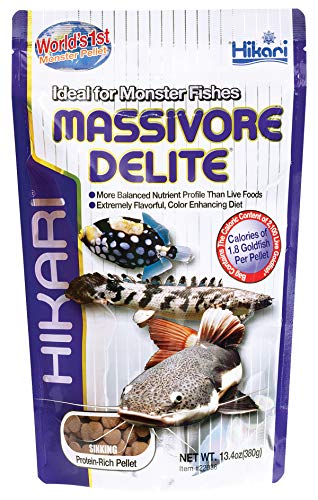
Hikari Massivore Delite is one of the most reliable pellet foods for large predatory fish like datnoids. It sinks quickly, offers dense nutrition, and is readily accepted by most specimens once transitioned off live food. Pairing it with frozen shrimp or krill a few times per week gives your datnoid a balanced long-term diet.
Feeding Schedule and Hunger Strikes
Feed juveniles 2-3 times daily to support growth. Adults do best with one feeding per day or every other day. Never feed more than the fish can consume in one sitting, and remove uneaten food promptly. Their high-protein diet degrades water quality fast.
One behavior that catches new owners off guard is the datnoid hunger strike. Datnoids will sometimes refuse food for days or even weeks at a time. This is not uncommon among predatory fish and is usually not a cause for alarm as long as the fish appears otherwise healthy and water parameters are normal. Hunger strikes often happen after environmental changes, new tankmates, or sometimes for no apparent reason at all.
Datnoid Tank Mates
Behavior
Datnoids are one of the few large predatory fish that genuinely bond with their keepers. With lifespans reaching 10-15 years, they have time to develop real familiarity with the person who feeds them. Many aquarists report their datnoids approaching the glass when they enter the room and eventually accepting food from their hands.
That said, they’re naturally cautious fish, especially when first introduced to a new tank. Juveniles in particular will spend most of their time hiding among plants, rocks, or driftwood. This is normal and can last weeks. Resist the urge to constantly rearrange the tank or hover at the glass – give them time and they’ll gradually spend more time in the open. A dimly lit tank with plenty of cover speeds up this acclimation process significantly.
Compatible Tank Mates
Datnoids are ambush predators that inhale smaller fish in a single strike. Anything that fits in their mouth will eventually be eaten. Their mouths are deceptively large for their body size, so err on the side of caution when choosing companions. They’re not typically aggressive toward fish they can’t swallow, but they may show territorial behavior toward newcomers until everyone settles in.
| Tank Mate | Compatibility | Notes |
|---|---|---|
| Dinosaur Bichir | Good | Bottom-dwelling, hardy, similarly sized. One of the best pairings for datnoids. |
| Large Catfish (Synodontis, Redtail) | Good | Must be large enough to avoid being swallowed. Provide separate hiding spots. |
| Peacock Bass | Good | Active predators that match datnoid size and temperament well. |
| Arowanas | Caution | Natural companions, often found together in the wild. Requires very large tanks (200+ gallons). |
| Oscars | Caution | Can work in large tanks but Oscars can be pushy. Monitor during feeding. |
| Group of Datnoids | Good | Keep in groups of 4-6 (even numbers) in very large tanks. They display more natural behavior in groups. |
| Small Community Fish | Avoid | Tetras, barbs, danios, livebearers – all will be eaten. |
| Aggressive Cichlids | Avoid | Red Devils, Umbees, and similar species are too aggressive and can stress datnoids to death. |
| Shrimp and Small Invertebrates | Avoid | Will be treated as food immediately. |
How to Keep Datnoid Fish Healthy
Datnoids are generally hardy once established, but they are more sensitive to environmental stress than many other large predatory fish. The most common sign of trouble is color darkening – a healthy datnoid should display bright gold and black tones. Persistent dark or washed-out coloring indicates something is wrong.
Common Diseases
| Condition | Symptoms | Treatment |
|---|---|---|
| Ich (White Spot Disease) | White spots on body and fins, clamped fins, scratching against objects | Quarantine + ich medication. Raise temp to 82-84°F gradually. Datnoids are sensitive to medications – use reduced doses. |
| Fin/Tail Rot | Ragged or decaying fins, discoloration at fin edges | Improve water quality immediately. Antibiotics (tetracycline) if bacterial. Usually resolves with clean water alone. |
| Eye Issues (Cloudy/Protruding) | Cloudy film over eyes, swelling around eyes | Often caused by vitamin A deficiency or bacterial infection. Vary diet, improve water quality. Antibiotics for bacterial cases. |
| Stress Darkening | Gold coloring fades to dark brown or black | Not a disease but a stress indicator. Check water quality, tank mates, and hiding spots. Color returns once the stressor is removed. |
Prevention
The best strategy is prevention through water quality. Maintain strong filtration, perform 25-30% water changes weekly, and keep nitrates below 20 ppm. Datnoids are more nitrate-sensitive than most predatory fish, so what’s acceptable for an Oscar or bichir may not be acceptable for a datnoid.
Avoid overfeeding – excess food degrades water quality rapidly. When feeding live foods, quarantine them beforehand to avoid introducing parasites or pathogens. High-quality pellets and frozen foods carry far less disease risk than live feeders and should form the core of the diet.
When treating a sick datnoid, move it to a bare hospital tank if possible. Datnoids can be sensitive to medications, so always start with reduced doses and monitor closely. Remove activated carbon from your filter during treatment, as it absorbs most medications.
Breeding Datnoids
Breeding datnoids in captivity is considered virtually impossible. To date, there are no reliable reports of successful breeding in home aquariums, and even large public aquariums have struggled to reproduce them. There are reports of some farms in Thailand achieving limited breeding success, but the methods have not been made public.
Most datnoids in the aquarium trade are wild-caught, which contributes to their higher price and limited availability. There are no visible differences between males and females, making it impossible to deliberately pair them. If you’re keeping a group, breeding is theoretically possible but should not be expected.
Frequently Asked Questions
How big do datnoid fish get?
Most datnoids in aquariums grow to 12-16 inches, while wild specimens may reach over 18 inches. Exceptional individuals can approach 24 inches in the wild.
How long do datnoids live?
With proper care, datnoids usually live 10-15 years in captivity. Maintaining excellent water quality and a varied diet is the biggest factor in lifespan.
Why is my datnoid turning black?
Color darkening is a stress response. Common causes include poor water quality (especially high nitrates), inadequate hiding spots, aggressive tank mates, or recent environmental changes. Test your water immediately and address any issues. Color should return within days once the stressor is removed.
Are datnoid fish aggressive?
Datnoids are predatory but not typically aggressive toward fish they cannot eat. They may show territorial behavior when first introduced to new tank mates, but this usually settles within a few weeks. They are far less aggressive than species like Oscars or large cichlids.
Can datnoids live with other fish?
Yes. They do well with other large species like bichirs, arowanas, large catfish, and peacock bass. They can also be kept in groups of their own kind (4-6 recommended). Avoid any fish small enough to fit in their mouth.
My datnoid won’t eat. What should I do?
Hunger strikes are common with datnoids and can last days or weeks. First, check water parameters to rule out environmental stress. If water quality is fine, try adding dither fish (like large barbs) to trigger competitive feeding behavior. You can also try switching food types or offering live food temporarily. As long as the fish appears otherwise healthy, a hunger strike is usually not dangerous.
Do datnoids need brackish water?
It depends on the species. The Indonesian Tiger, Siamese Tiger, and Northern Thailand Tiger are all freshwater fish and do not need salt. The American Tiger (Silver Tiger) and New Guinea Tiger are naturally found in brackish environments. If your datnoid was sold without a species label, it’s almost certainly an Indonesian Tiger and should be kept in freshwater.
How often should I feed a datnoid?
Juveniles should be fed 2-3 times daily. Adults do best with one feeding per day or every other day. Remove uneaten food promptly to maintain water quality.
Can datnoid fish be bred in captivity?
Breeding datnoids in home aquariums is considered nearly impossible. Males and females cannot be visually distinguished, and the specific environmental triggers for spawning are not well understood. Most specimens in the hobby are wild-caught.
Final Thoughts
Datnoids are one of the most rewarding predatory fish you can keep. They’re more expensive and demanding than many other species, but the combination of striking appearance, long lifespan, and genuine personality makes them worth the investment for hobbyists who are prepared to meet their needs.
The most common mistakes are keeping them in tanks that are too small, letting water quality slip (particularly nitrates), and panicking during hunger strikes. Get those three things right – big tank, clean water, patience with feeding – and your datnoid can thrive for well over a decade.
Looking for compatible tank mates? Check our care guides for Dinosaur Bichirs and Peacock Bass, two of the best companions for datnoids.